00

Mobile App

UI/UX & Product Design

UI/UX & Product Design

influency

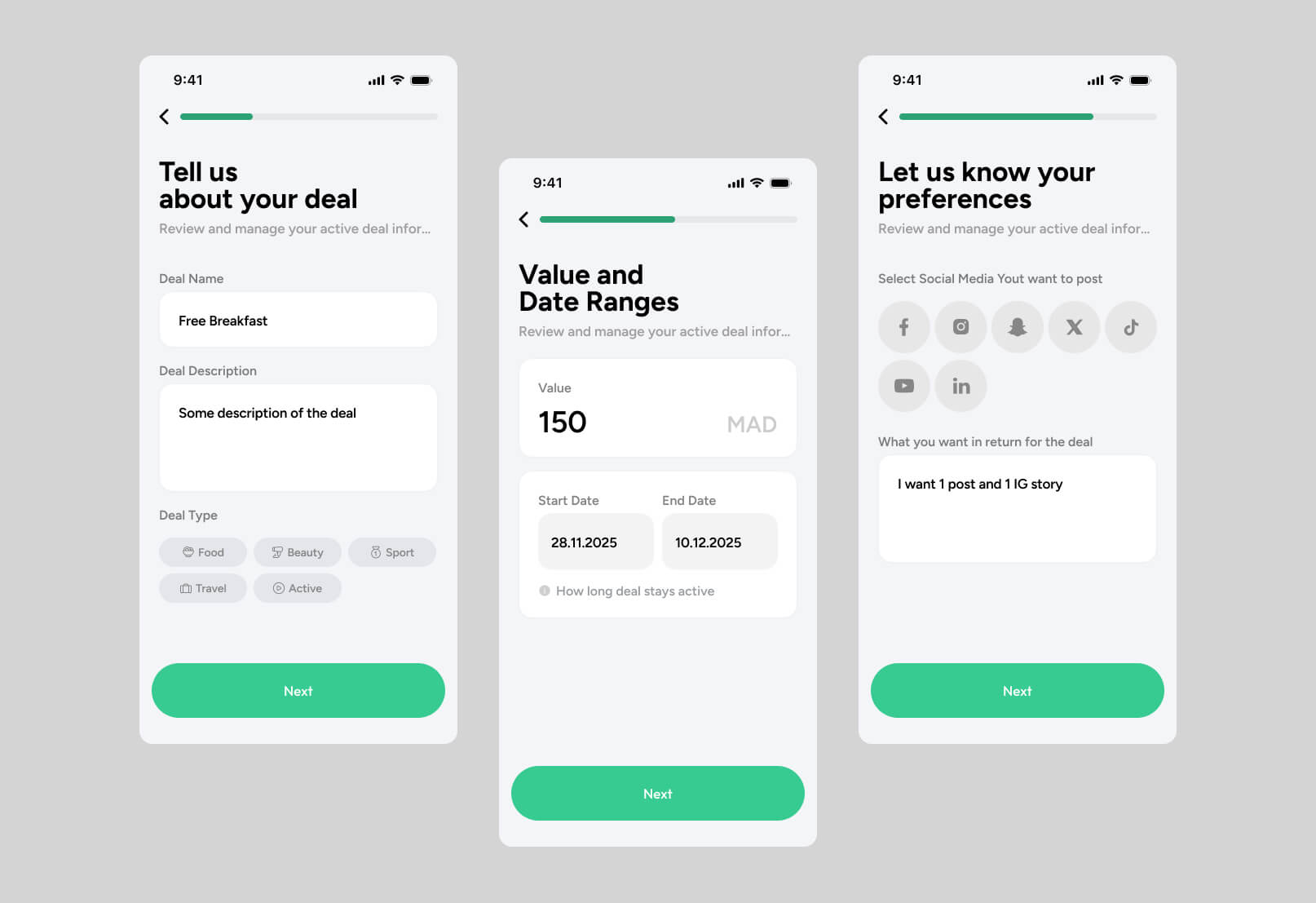
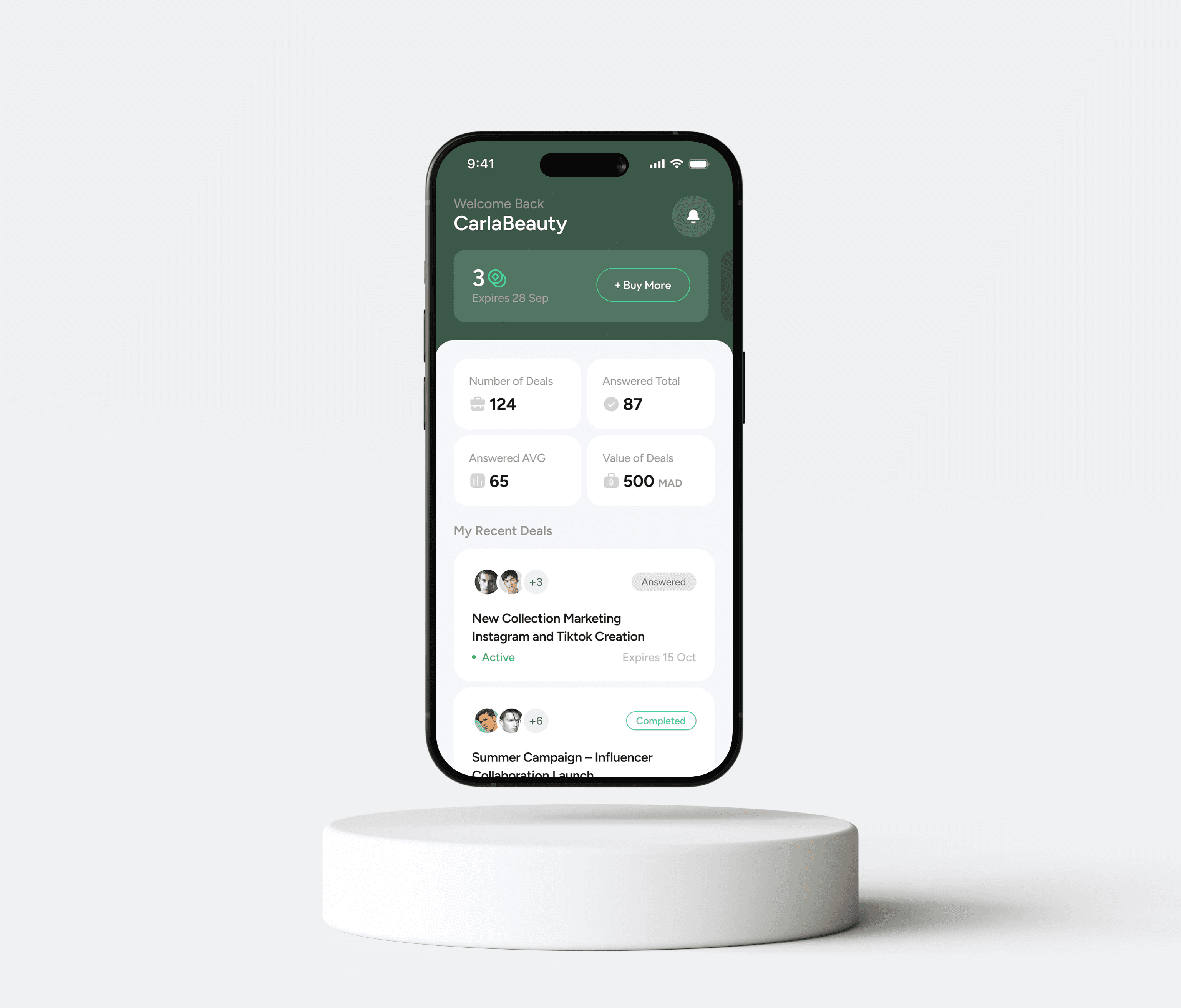
influency is app that connect businesses with influencers through structured campaign deals, allowing brands to create collaboration requests, review applications, and manage influencer partnerships in one centralized system. It combines campaign management, influencer discovery, social media analytics, scheduling, and collaboration tracking into a multi-role ecosystem designed for both businesses and creators.

challange

One of the main challenges was designing a platform that balances the needs of two very different user groups — businesses and influencers — while keeping the experience intuitive and operationally clear for both sides. Businesses need structured campaign management, analytics, and scheduling tools, while influencers require a fast and approachable way to discover deals, apply for collaborations, and manage commitments without unnecessary friction. Another major challenge was organizing complex collaboration workflows into a system that feels lightweight and transparent. Campaigns involve multiple variables such as platform requirements, content types, pricing, application timing, influencer selection, and scheduled publishing dates. Without careful UX structure, the experience could quickly become overwhelming and difficult to manage.

One of the main challenges was designing a platform that balances the needs of two very different user groups — businesses and influencers — while keeping the experience intuitive and operationally clear for both sides. Businesses need structured campaign management, analytics, and scheduling tools, while influencers require a fast and approachable way to discover deals, apply for collaborations, and manage commitments without unnecessary friction. Another major challenge was organizing complex collaboration workflows into a system that feels lightweight and transparent. Campaigns involve multiple variables such as platform requirements, content types, pricing, application timing, influencer selection, and scheduled publishing dates. Without careful UX structure, the experience could quickly become overwhelming and difficult to manage.

One of the main challenges was designing a platform that balances the needs of two very different user groups — businesses and influencers — while keeping the experience intuitive and operationally clear for both sides. Businesses need structured campaign management, analytics, and scheduling tools, while influencers require a fast and approachable way to discover deals, apply for collaborations, and manage commitments without unnecessary friction. Another major challenge was organizing complex collaboration workflows into a system that feels lightweight and transparent. Campaigns involve multiple variables such as platform requirements, content types, pricing, application timing, influencer selection, and scheduled publishing dates. Without careful UX structure, the experience could quickly become overwhelming and difficult to manage.

solution

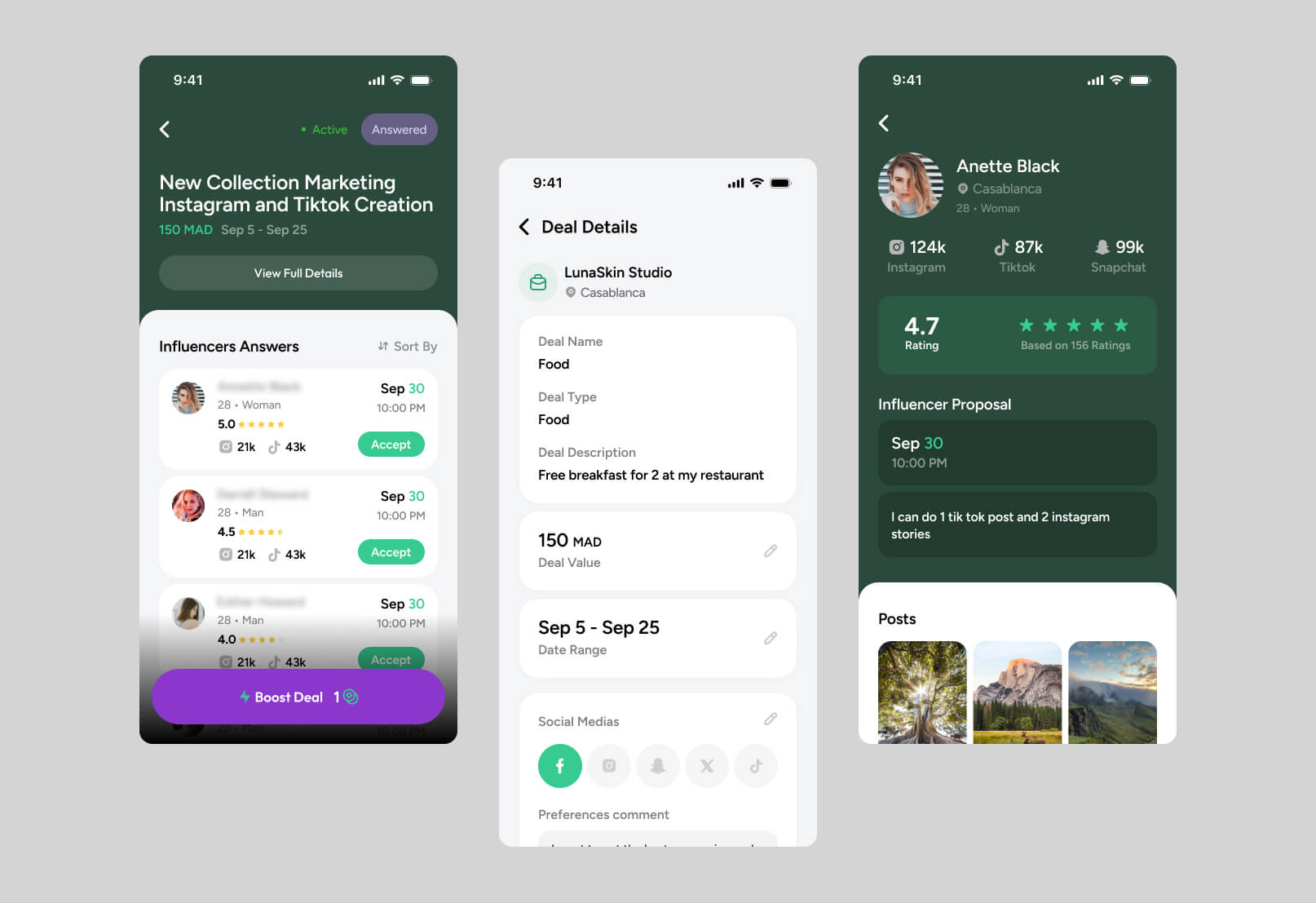
The solution was to build a role-based platform architecture with separate but connected experiences for businesses and influencers. Businesses receive a structured dashboard for creating deals, reviewing influencer applications, analyzing social media statistics, and managing campaign schedules through a centralized calendar system. Influencers, in contrast, interact with a simplified discovery and application flow focused on visibility, availability, and fast communication of collaboration details. Special attention was also given to transparency and decision-making. Influencer profiles were designed to combine social statistics, visual identity, and content previews into a clear evaluation system that helps businesses quickly compare creators and select the right collaborators for each campaign.

The solution was to build a role-based platform architecture with separate but connected experiences for businesses and influencers. Businesses receive a structured dashboard for creating deals, reviewing influencer applications, analyzing social media statistics, and managing campaign schedules through a centralized calendar system. Influencers, in contrast, interact with a simplified discovery and application flow focused on visibility, availability, and fast communication of collaboration details. Special attention was also given to transparency and decision-making. Influencer profiles were designed to combine social statistics, visual identity, and content previews into a clear evaluation system that helps businesses quickly compare creators and select the right collaborators for each campaign.

The solution was to build a role-based platform architecture with separate but connected experiences for businesses and influencers. Businesses receive a structured dashboard for creating deals, reviewing influencer applications, analyzing social media statistics, and managing campaign schedules through a centralized calendar system. Influencers, in contrast, interact with a simplified discovery and application flow focused on visibility, availability, and fast communication of collaboration details. Special attention was also given to transparency and decision-making. Influencer profiles were designed to combine social statistics, visual identity, and content previews into a clear evaluation system that helps businesses quickly compare creators and select the right collaborators for each campaign.

how was the process going

discovery & analysis

The discovery phase focused on understanding how businesses and influencers currently manage collaborations and where existing workflows create friction, inefficiency, and communication gaps. The goal was to design a structured ecosystem that simplifies campaign creation, influencer discovery, scheduling, and collaboration management for both sides of the platform.

problem analysis

audience analysis

competitor research

final direction


ux structure

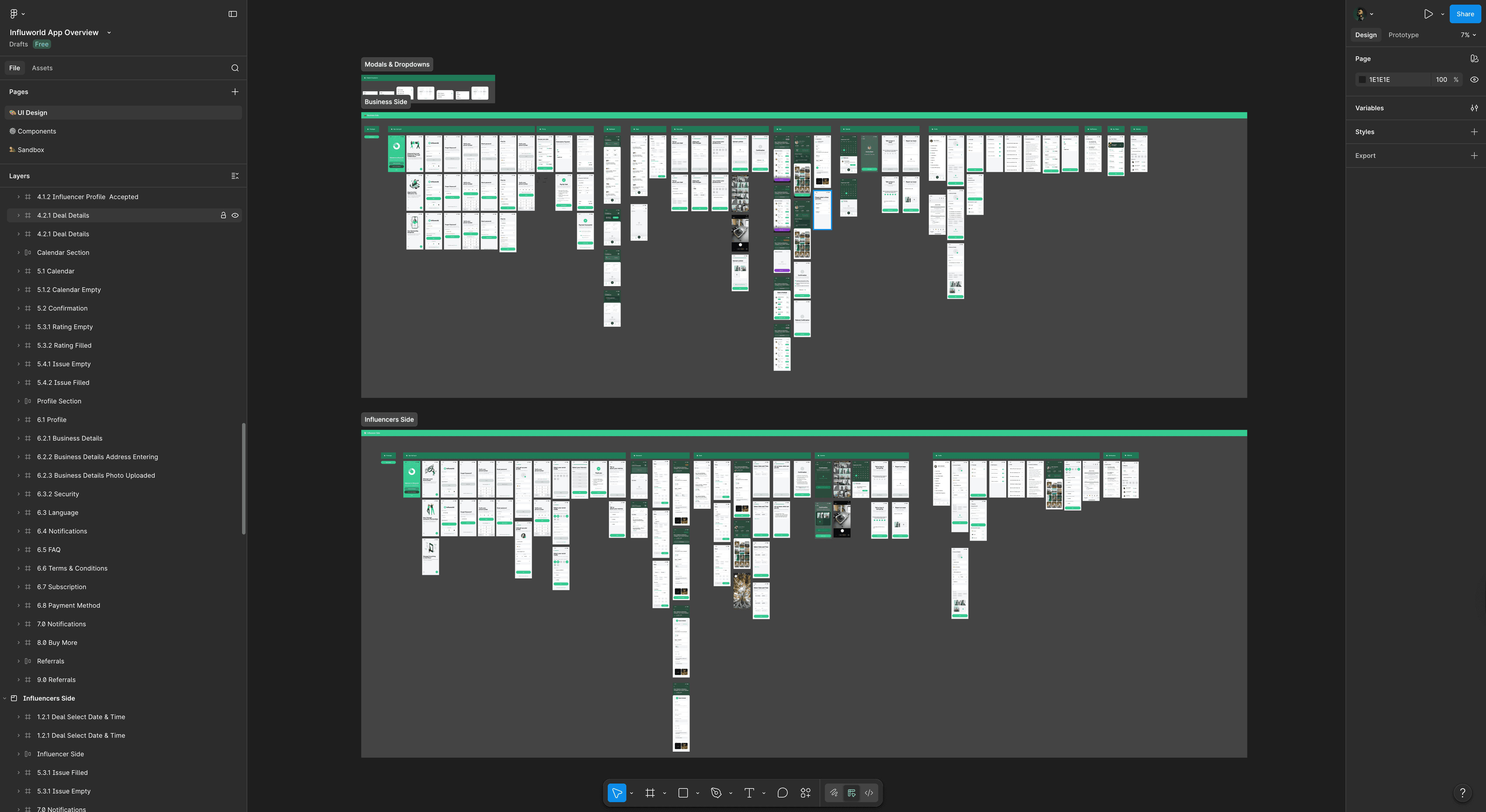
The UX process focused on mapping the complete collaboration journey between businesses and influencers, identifying where friction typically appears during campaign creation, application review, creator selection, and scheduling. Since the platform contains two interconnected user roles, a major part of the process involved designing parallel flows that remain synchronized while still feeling tailored to each audience.
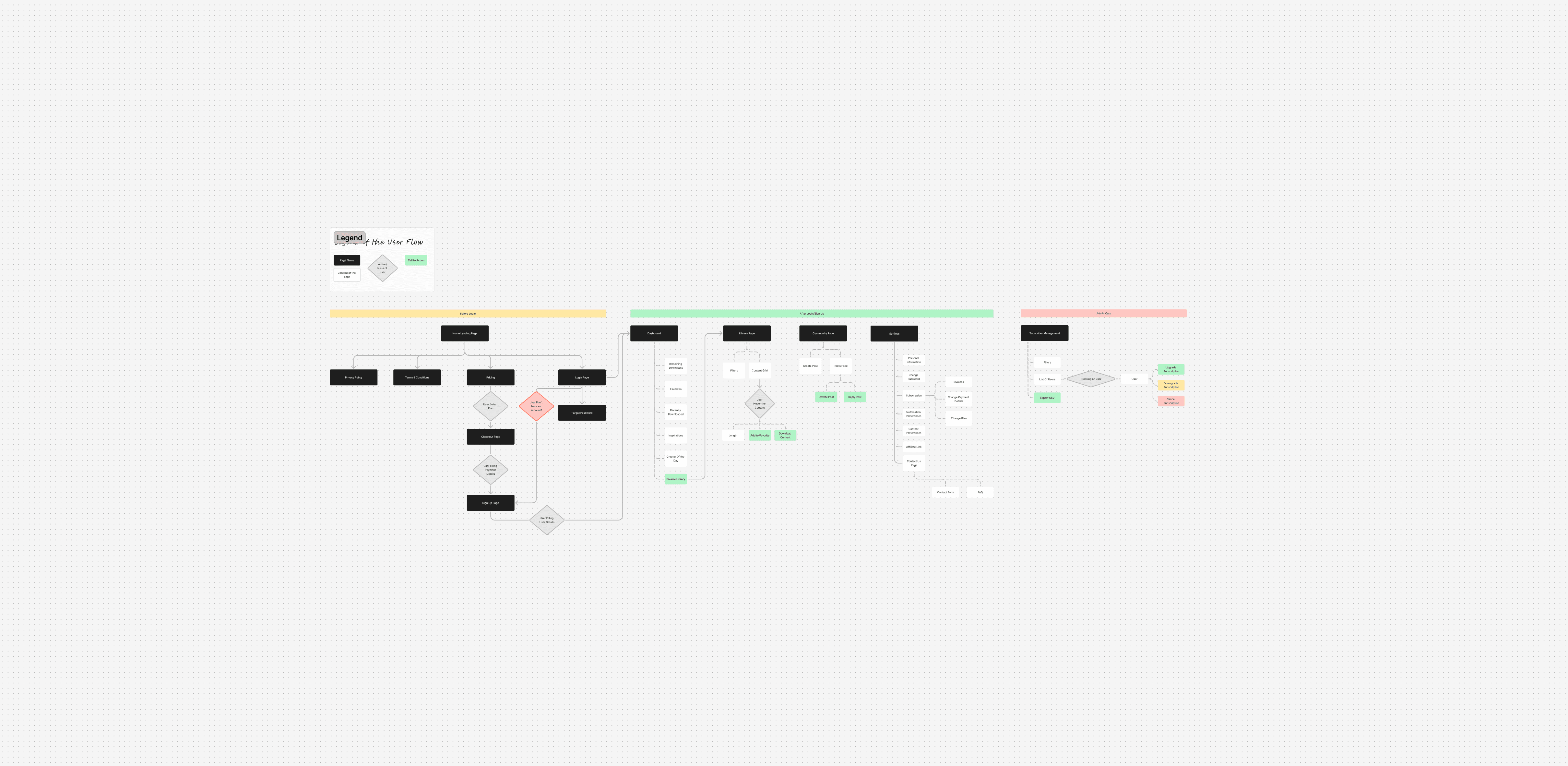
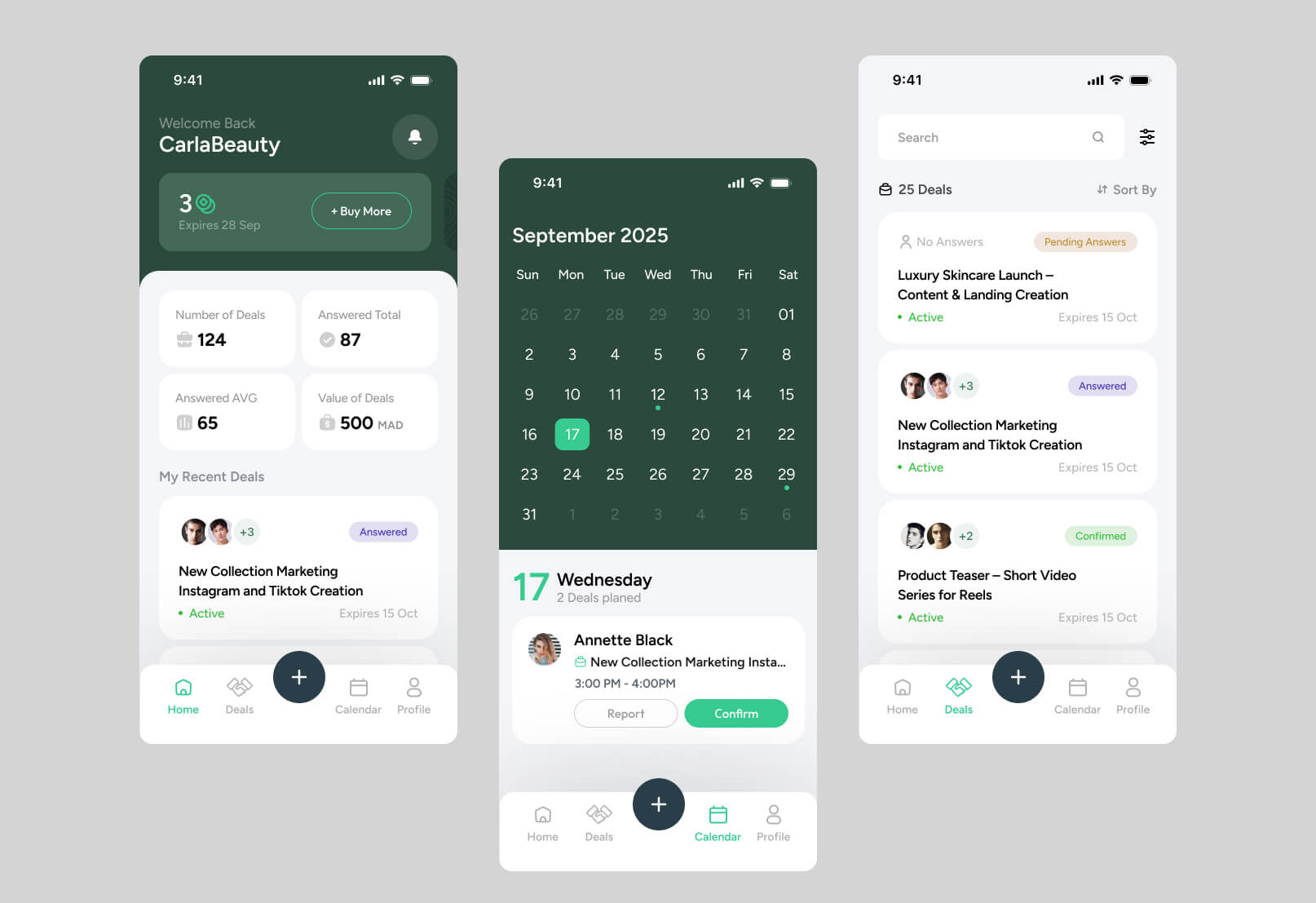
User flows were built around the lifecycle of a campaign deal — from creation and application to approval, scheduling, and execution. On the business side, the experience prioritizes campaign management, influencer evaluation, and calendar visibility. On the influencer side, the flow focuses on fast opportunity discovery, simplified applications, and clear visibility into upcoming collaborations.


Special attention was given to reducing operational complexity. Information architecture and interaction flows were designed to minimize unnecessary steps while keeping campaign details, social analytics, availability, and scheduling easily accessible throughout the process.
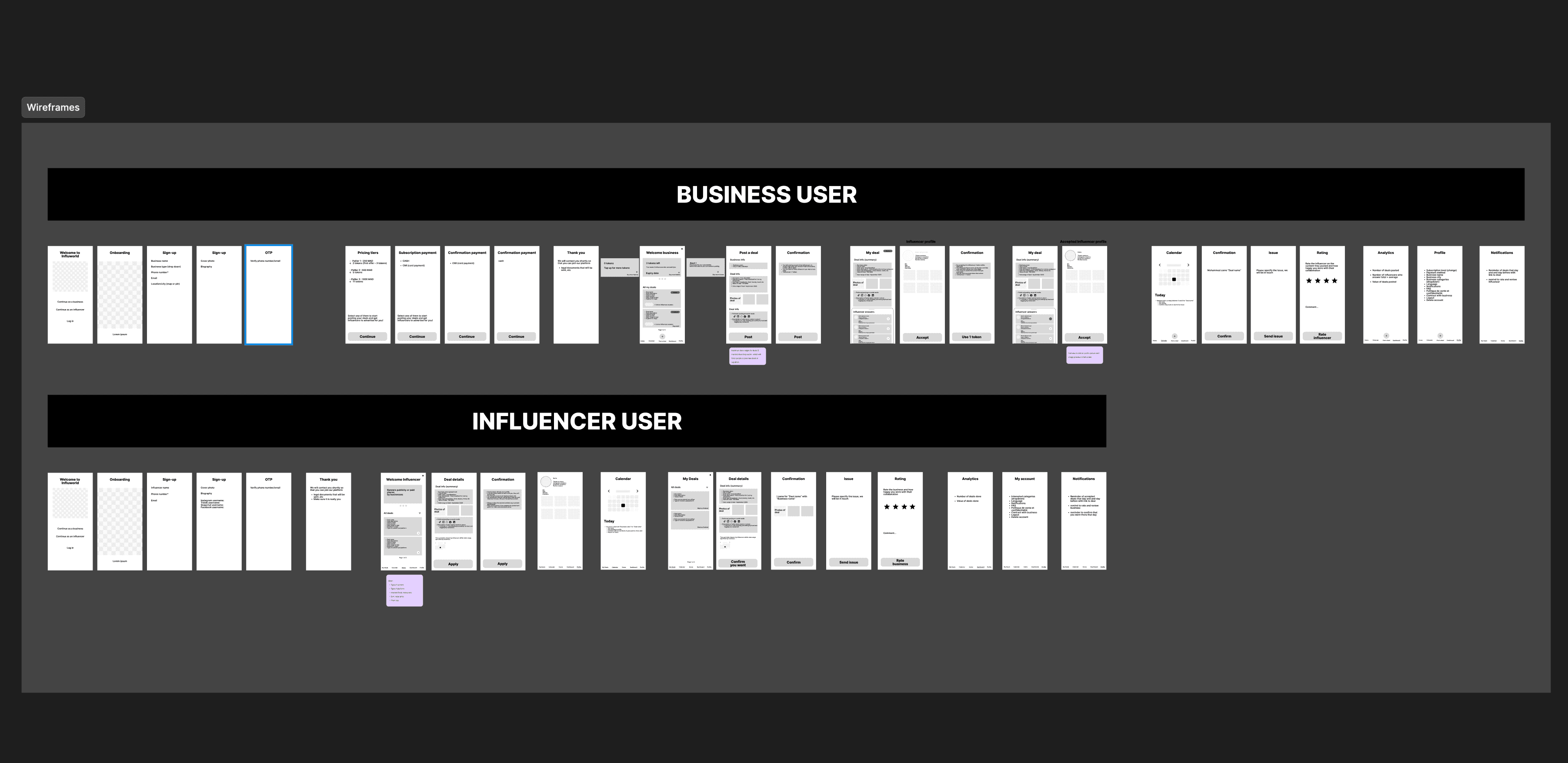
The final UX structure creates a connected ecosystem where both sides can manage collaborations transparently without relying on fragmented communication or external organizational tools.


interface design

The interface design was built around clarity, operational simplicity, and balancing two distinct user experiences within the same ecosystem. Since both businesses and influencers interact with large amounts of campaign, scheduling, and profile data, the visual system needed to organize information in a way that remains lightweight and easy to scan.

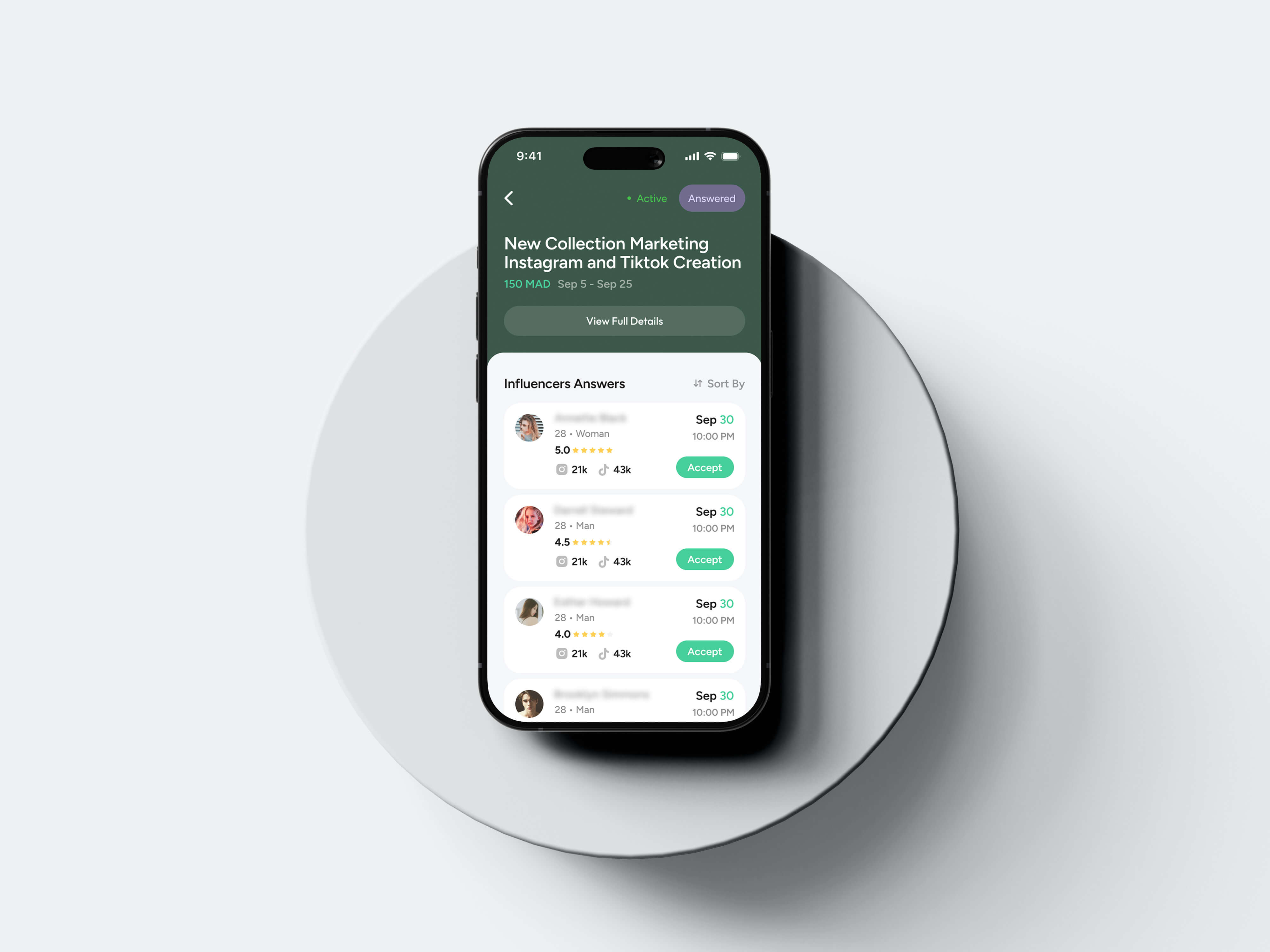
The business side follows a more structured and management-oriented design direction, prioritizing campaign creation, influencer evaluation, analytics visibility, and scheduling tools. Card-based layouts, clear hierarchy, and modular dashboard components were used to simplify comparison between influencer applications and make campaign management more efficient.
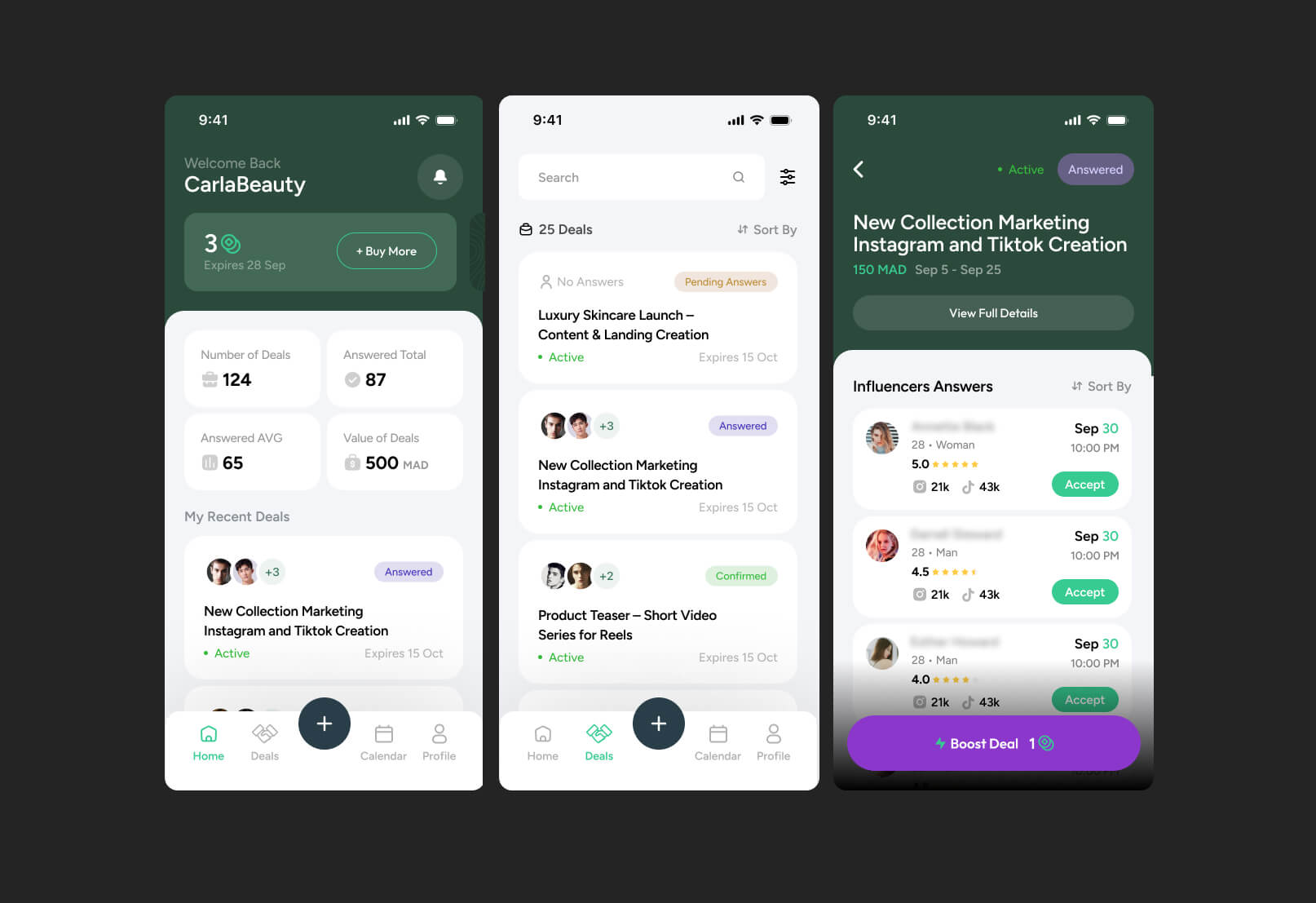
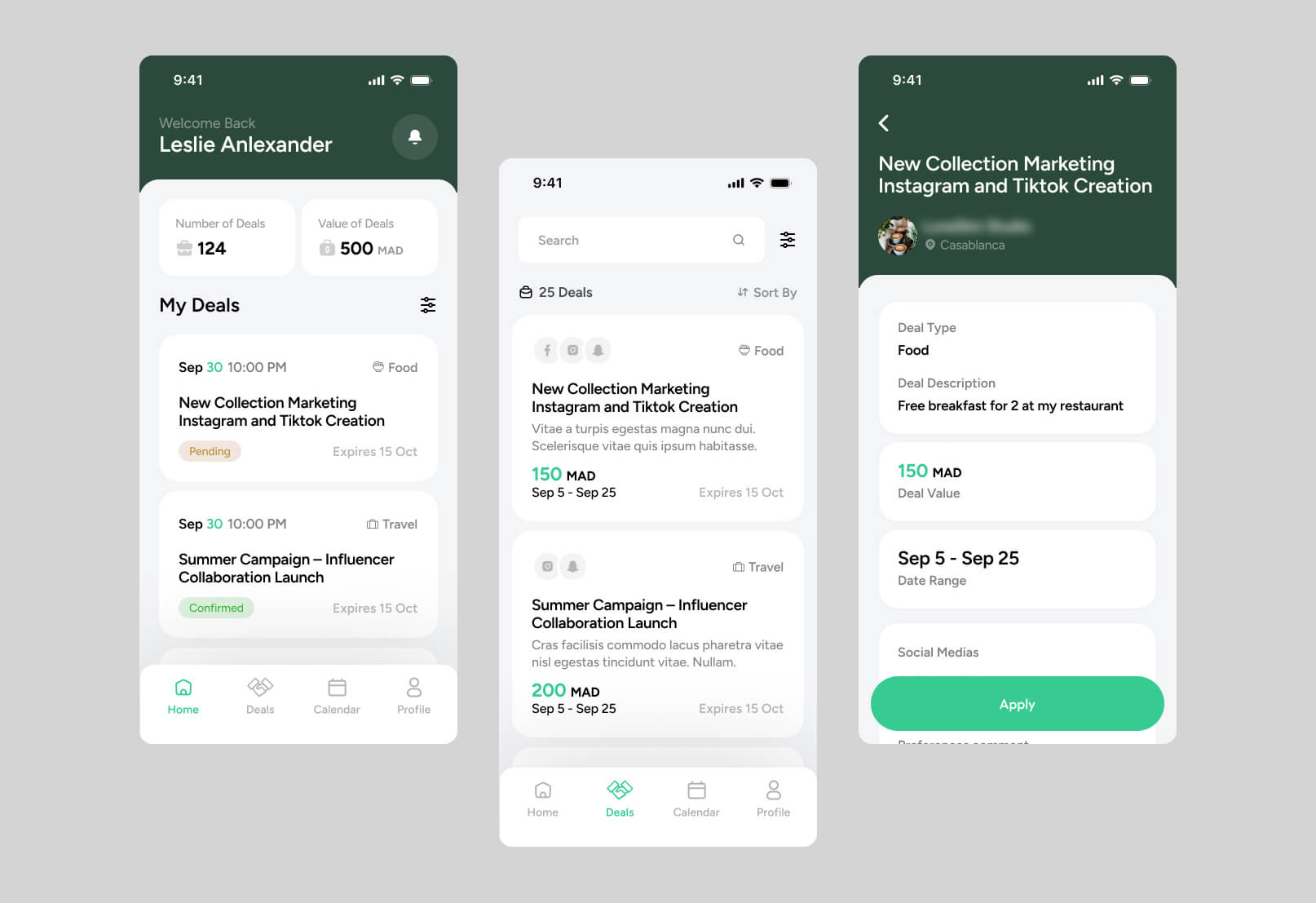
The influencer side is more streamlined and interaction-focused, emphasizing opportunity discovery, application flows, and visibility into active collaborations. The UI prioritizes fast browsing and simplified decision-making, ensuring creators can quickly understand deal requirements, timelines, and compensation details without navigating complex management systems.
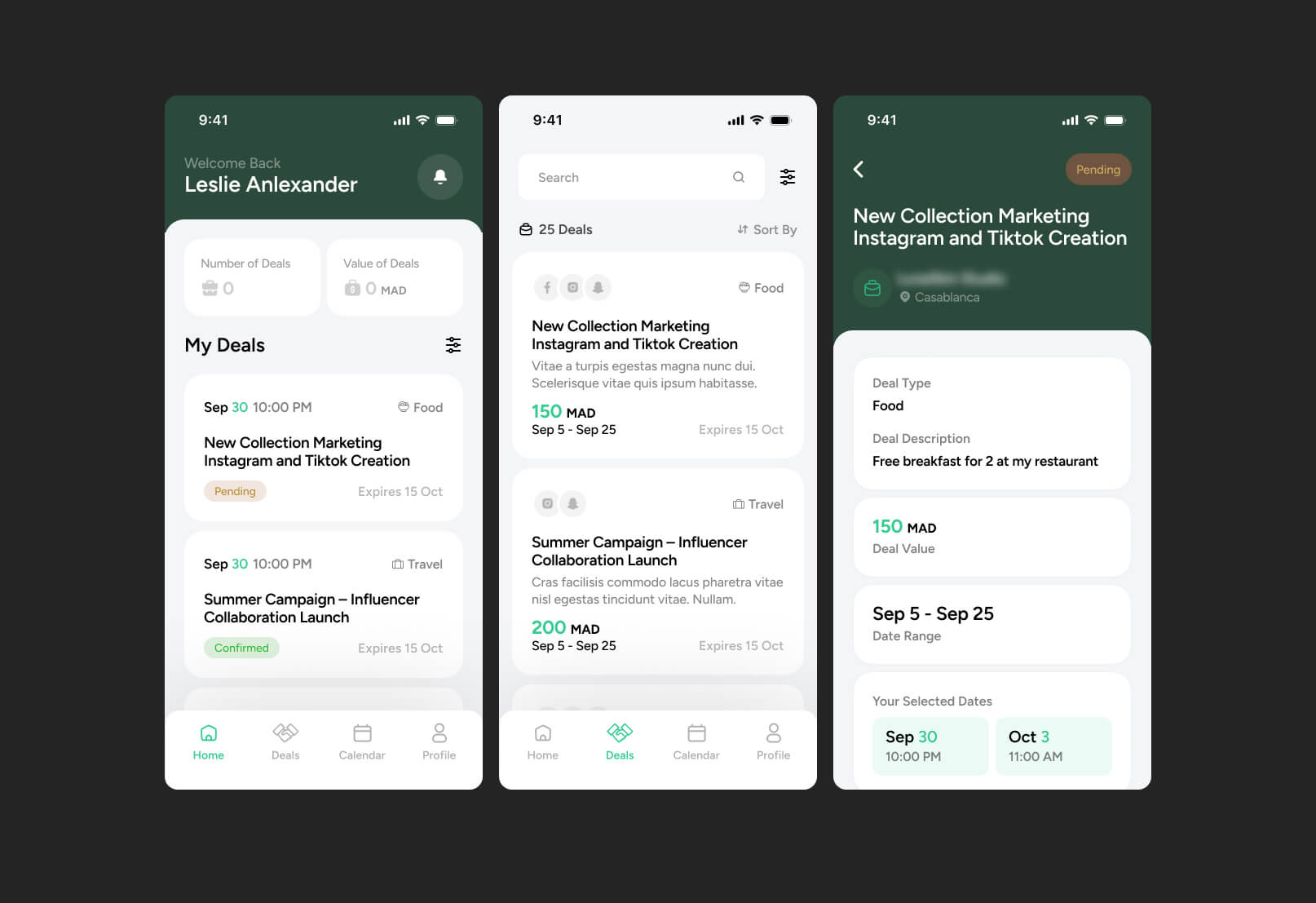
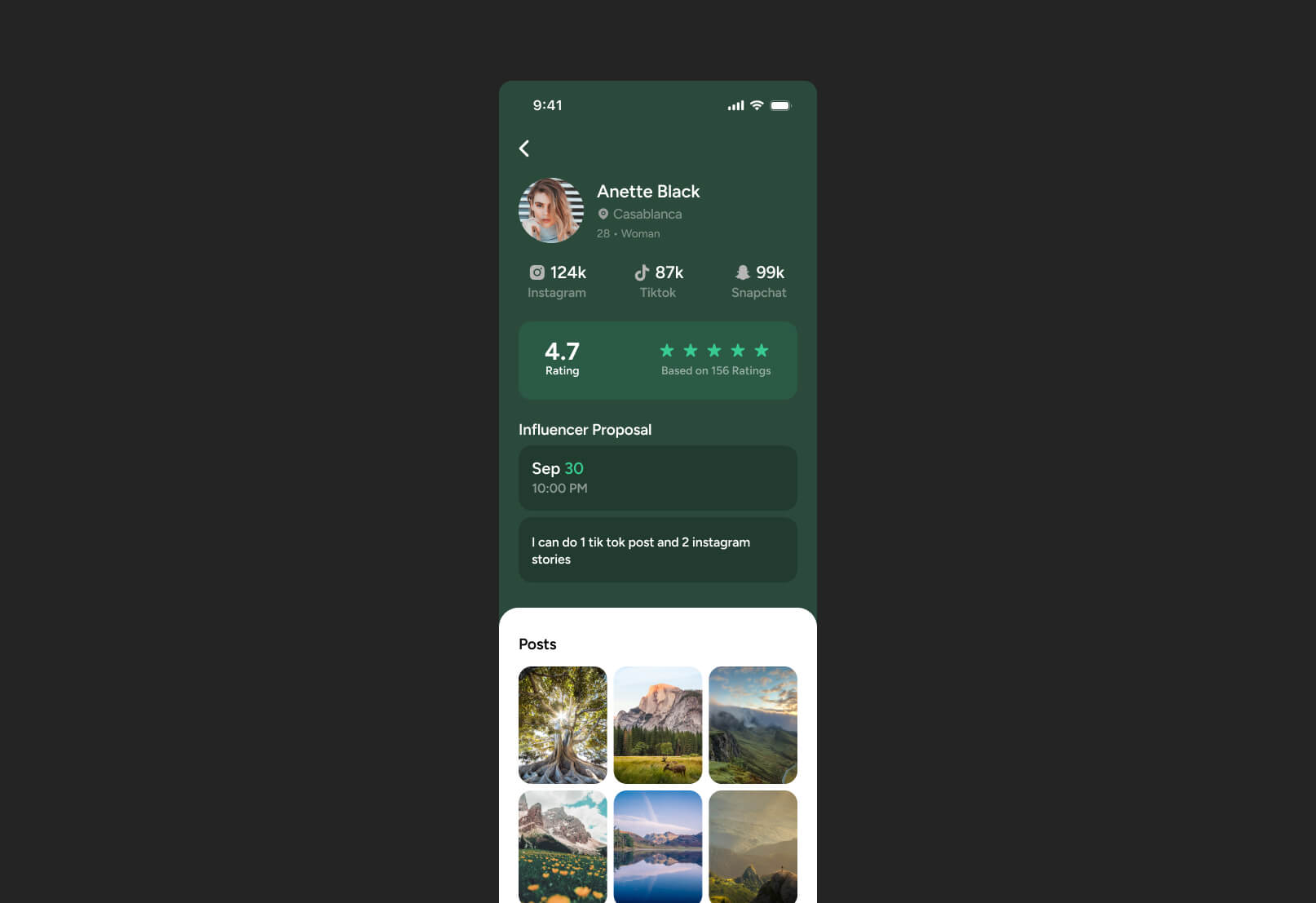
A strong emphasis was also placed on profile presentation and trust-building elements. Influencer profiles combine social statistics, visual content previews, and activity data into a structured layout that helps businesses evaluate creators quickly while still preserving the creator’s personal identity and content style.
Overall, the interface direction balances marketplace interaction with workflow management, creating a system that feels modern, scalable, and operationally clear across both sides of the platform.
outcomes

The final product delivers a structured influencer collaboration ecosystem that centralizes campaign creation, creator discovery, scheduling, and partnership management into a single platform. By replacing fragmented communication and manual coordination workflows, the system creates a more transparent and operationally efficient experience for both businesses and influencers.


The role-based UX structure allows each side of the platform to focus on its core tasks without unnecessary complexity — businesses can manage campaigns, evaluate creators, and organize schedules through centralized dashboards, while influencers can quickly discover opportunities and manage collaborations through lightweight application flows.


The integration of campaign scheduling, influencer analytics, and calendar-based workflow management transforms the platform from a simple marketplace into a scalable operational system for long-term creator partnerships. The result is a product that improves organization, reduces friction, and creates clearer collaboration processes across the entire influencer marketing workflow.

role

Product Designer

industry

Social Media

duration

2,5 weeks

tools

Figma

project gallery
contact me

let’s discuss your project, product or opportunity

Whether you’re building a product, redesigning an existing experience, or looking for a long-term collaboration, feel free to get in touch

contact me

let’s discuss your project, product or opportunity

Whether you’re building a product, redesigning an existing experience, or looking for a long-term collaboration, feel free to get in touch