00
SaaS
remojii
Remojii is an AI-powered remote job platform focused on connecting professionals with remote-friendly companies, especially in the DACH region. It uses smart matching, automated profile creation, and personality-based insights to help candidates discover jobs that fit their skills, experience, and work preferences more accurately than traditional job boards.
challange
solution
how was the process going
discovery & analysis
The discovery phase focused on understanding the modern remote hiring landscape and identifying why existing job platforms often fail to create meaningful connections between candidates and companies. The research combined competitor analysis, audience behavior, hiring trends, and UX evaluation of current recruitment platforms. The goal was to define a product direction that feels more intelligent, human-centered, and efficient than traditional job boards
problem analysis
audience analysis
competitor research
final direction
ux structure
The UX structure was designed around simplicity, clarity, and reducing decision fatigue throughout the hiring journey. Since users often interact with multiple job platforms simultaneously, the experience needed to feel faster, more intuitive, and less overwhelming than traditional recruitment systems. The primary focus was creating a seamless flow between discovering opportunities, building a profile, and applying for jobs with minimal friction.ring it in a meaningful way.
user flow
The user flow was designed to guide candidates through a streamlined and personalized hiring experience while minimizing unnecessary complexity.
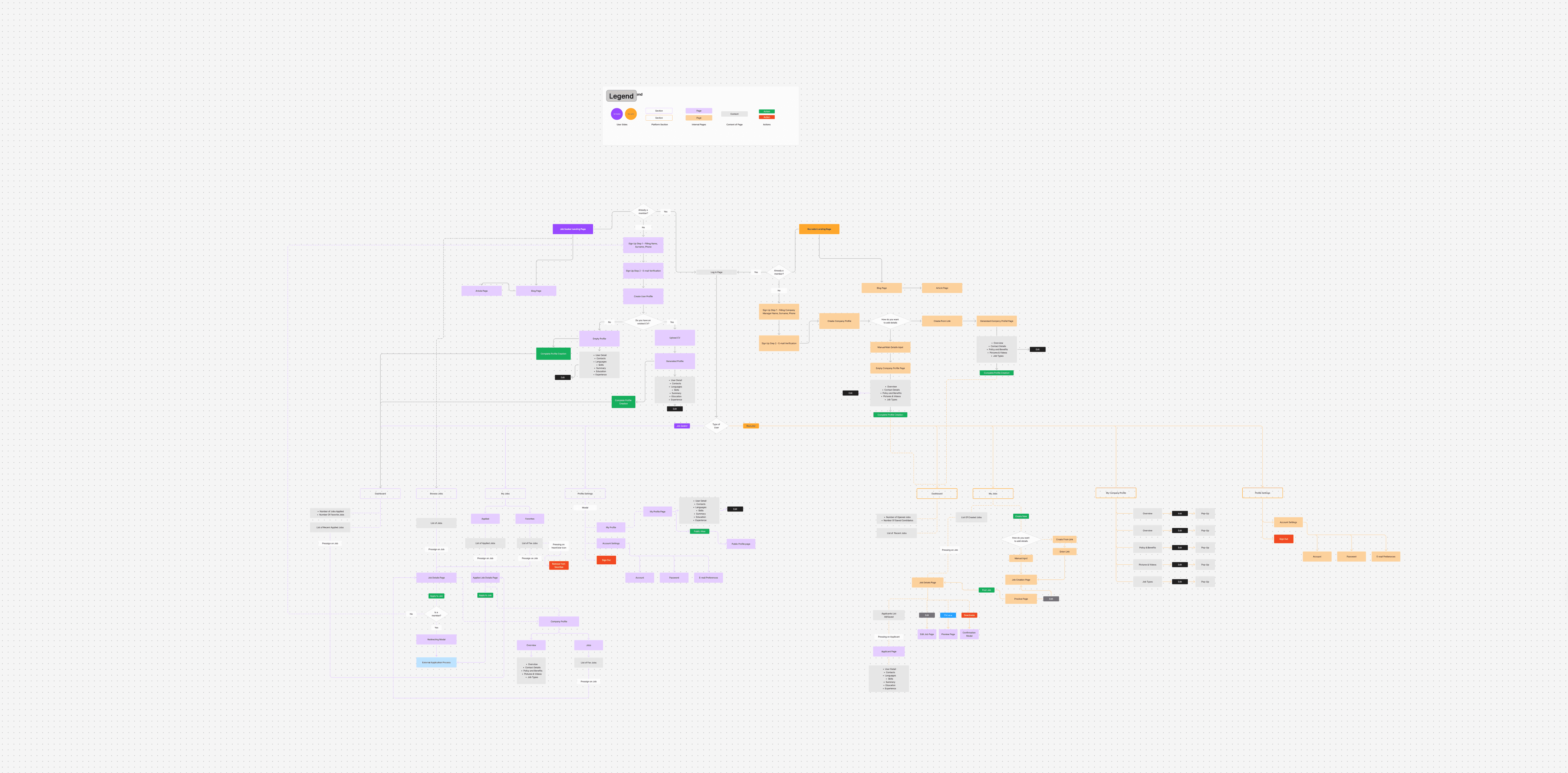
The journey begins with onboarding, where users can either create a profile manually or upload their resume for automated profile generation. After completing the initial setup, the system analyzes the user’s experience, skills, and preferences to generate personalized job recommendations.
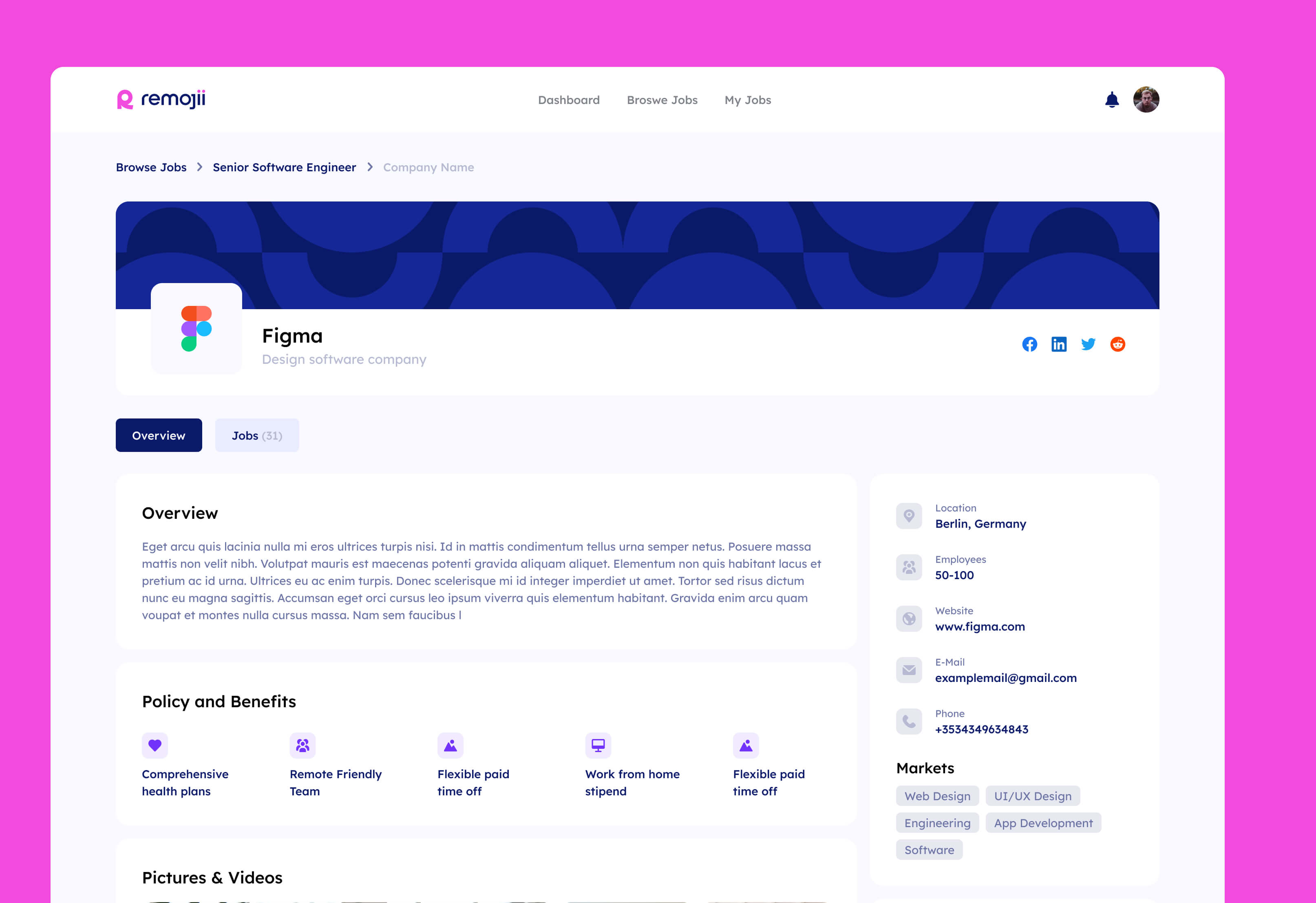
From there, users can explore curated job listings, review detailed company information, compare opportunities, and save positions for later. The platform emphasizes quick scanning and clean information architecture to reduce cognitive overload during browsing.
Once users find a relevant opportunity, they can access a simplified application flow designed to reduce repetitive actions and improve completion rates. After applying, users are able to track application progress, manage saved jobs, and continue receiving updated recommendations based on their interactions and evolving preferences.
interface design
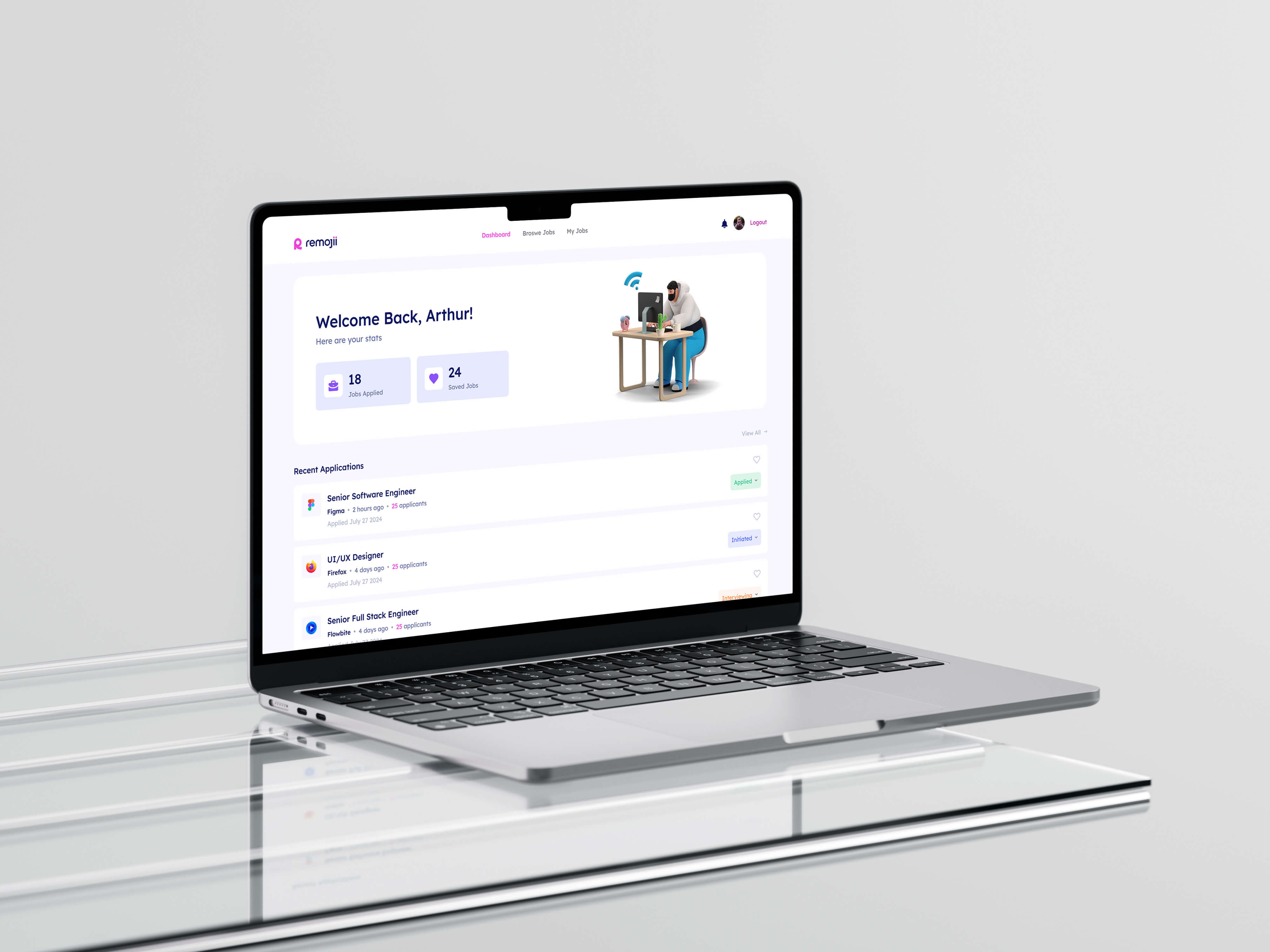
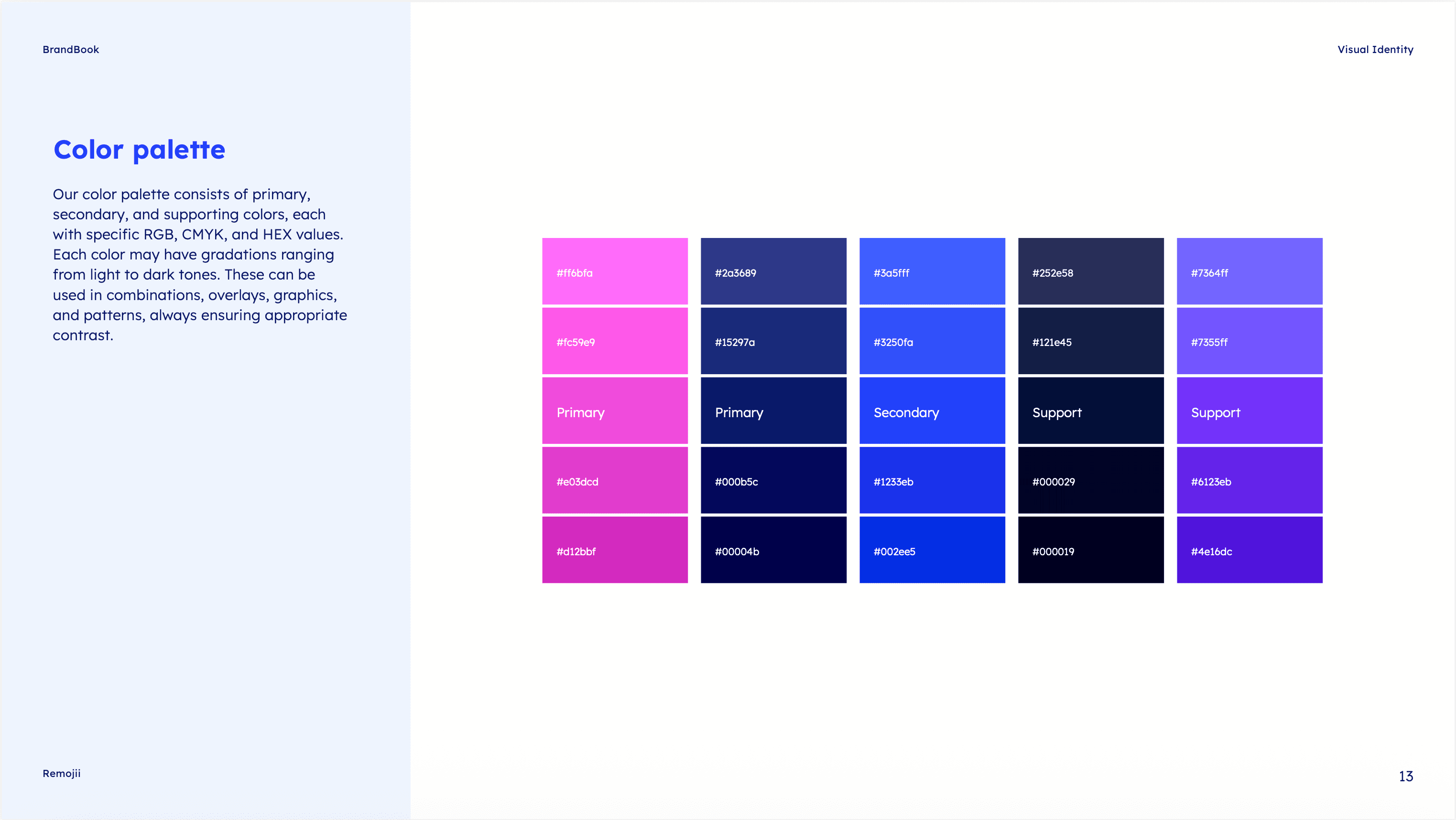
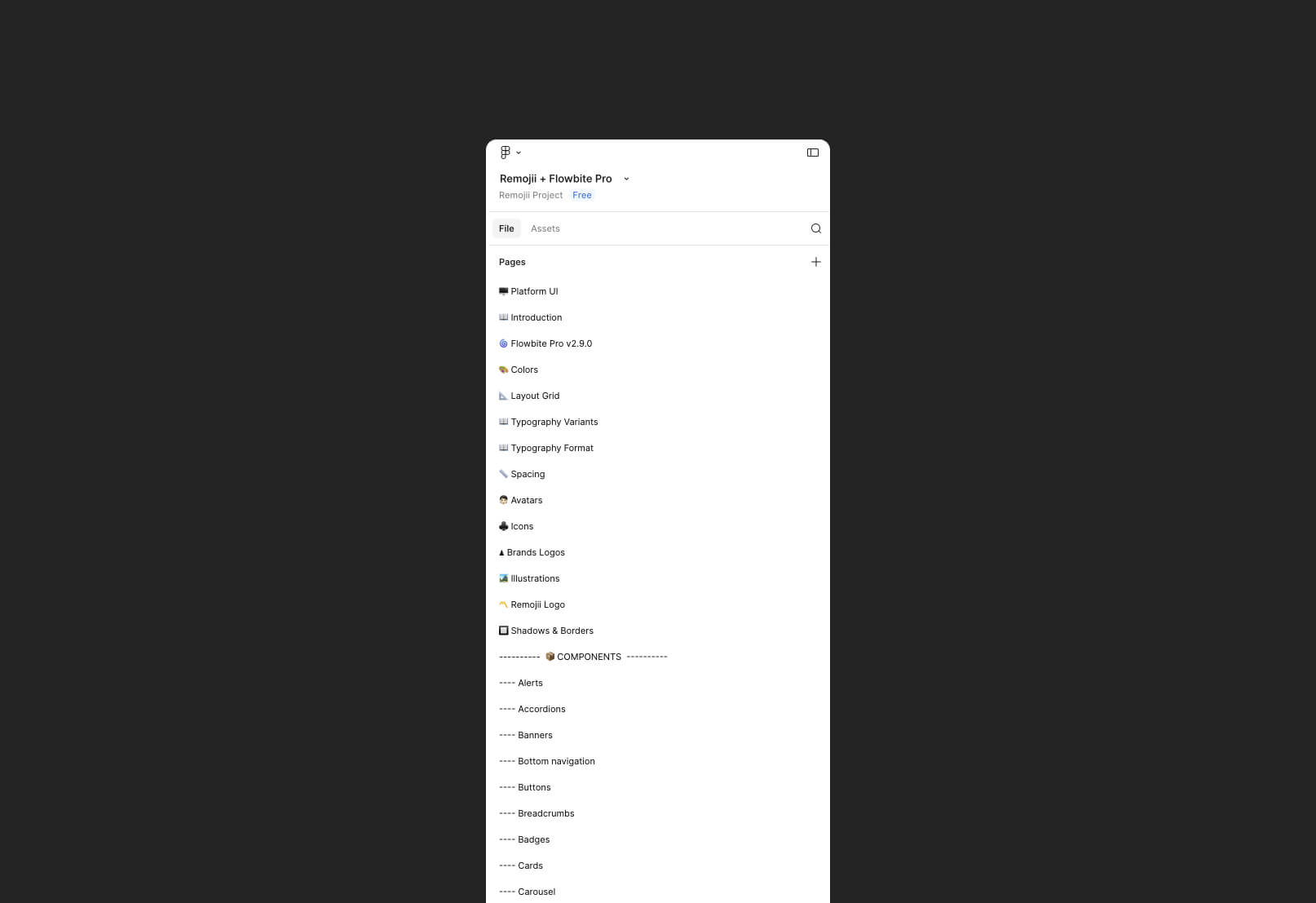
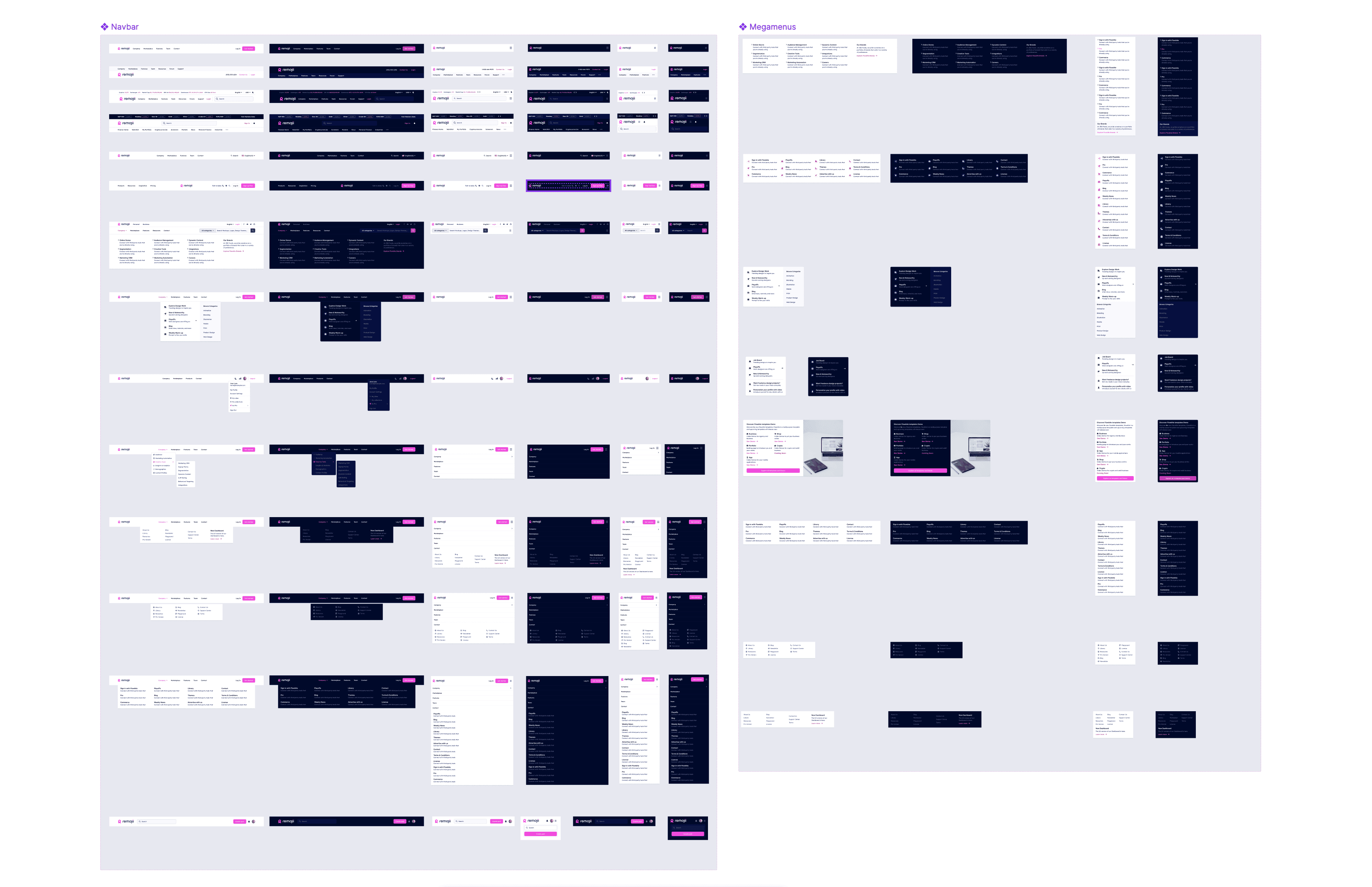
The interface design was developed within the constraints of an existing design system and pre-defined branding guidelines. Instead of building a visual language from scratch, the focus was on extending and adapting the system to fit the specific needs of a remote job-matching platform. The UI was based on Flowbite Pro, which provided a structured set of components, typography rules, and interaction patterns.
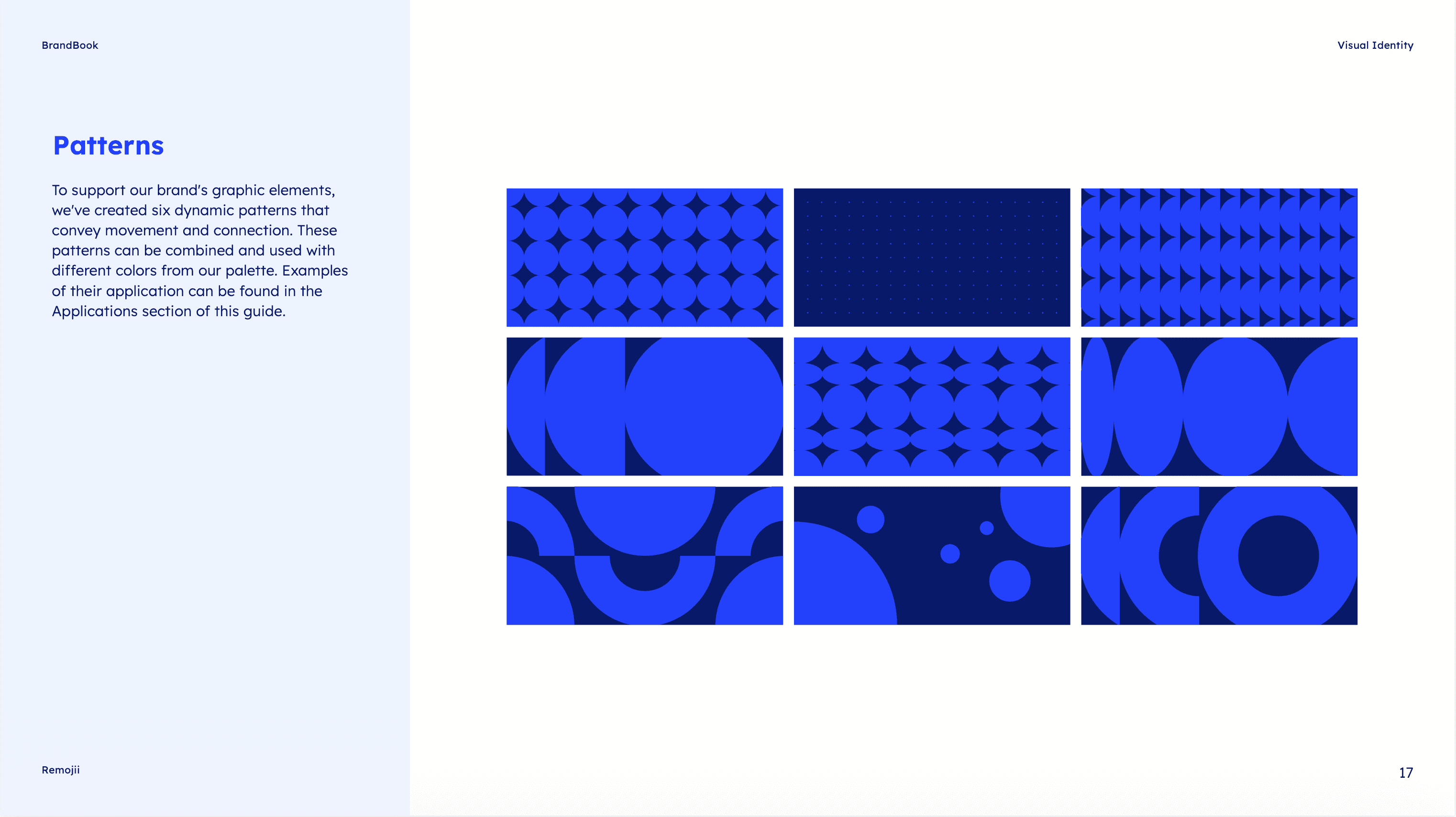
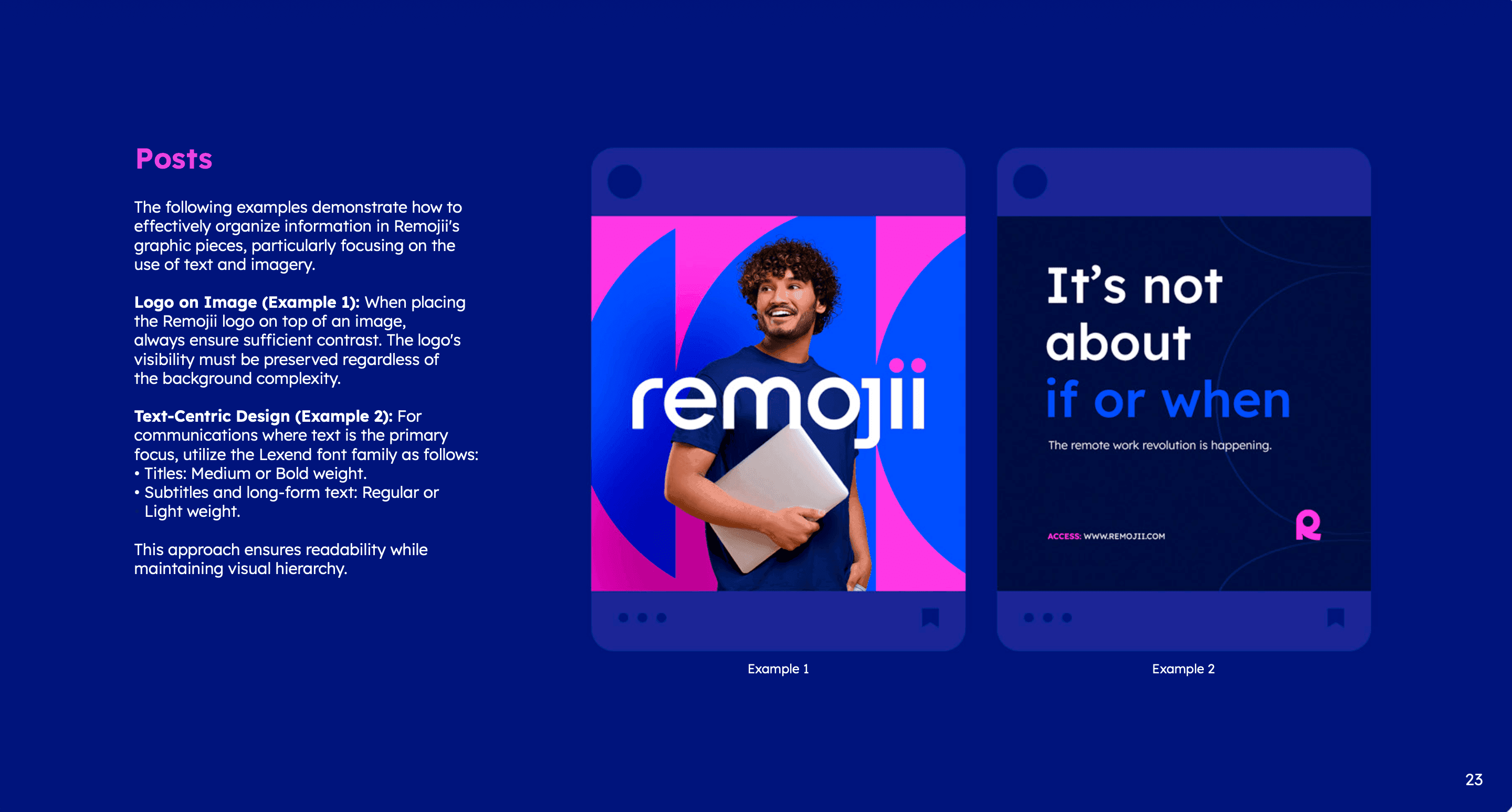
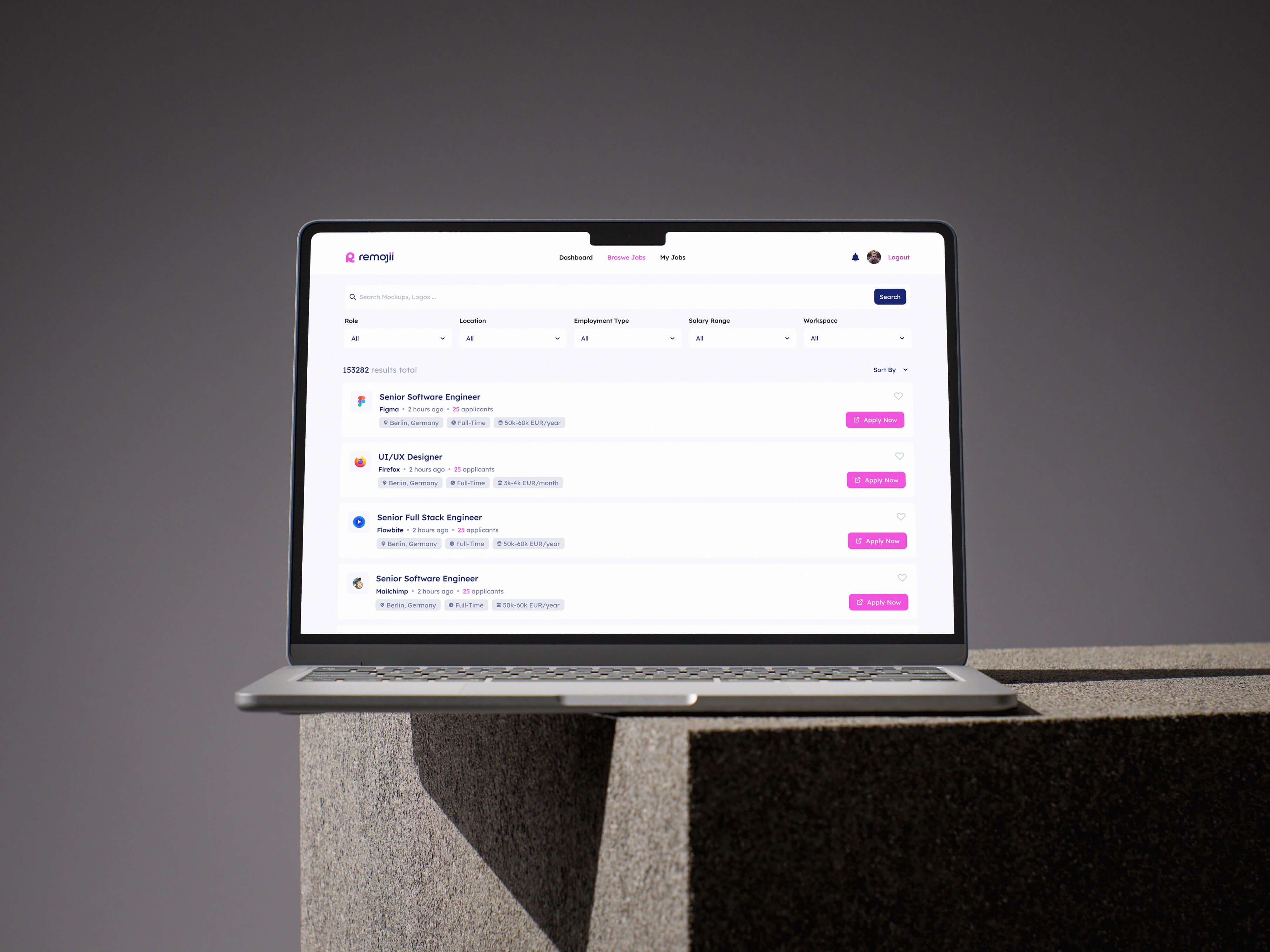
The main challenge was balancing consistency with customization. While the design system ensured visual coherence and development efficiency, it also introduced limitations in flexibility. As a result, the work focused on refining component behavior, improving hierarchy, and adjusting layouts to better support complex information such as job details, compatibility signals, and personalized recommendations
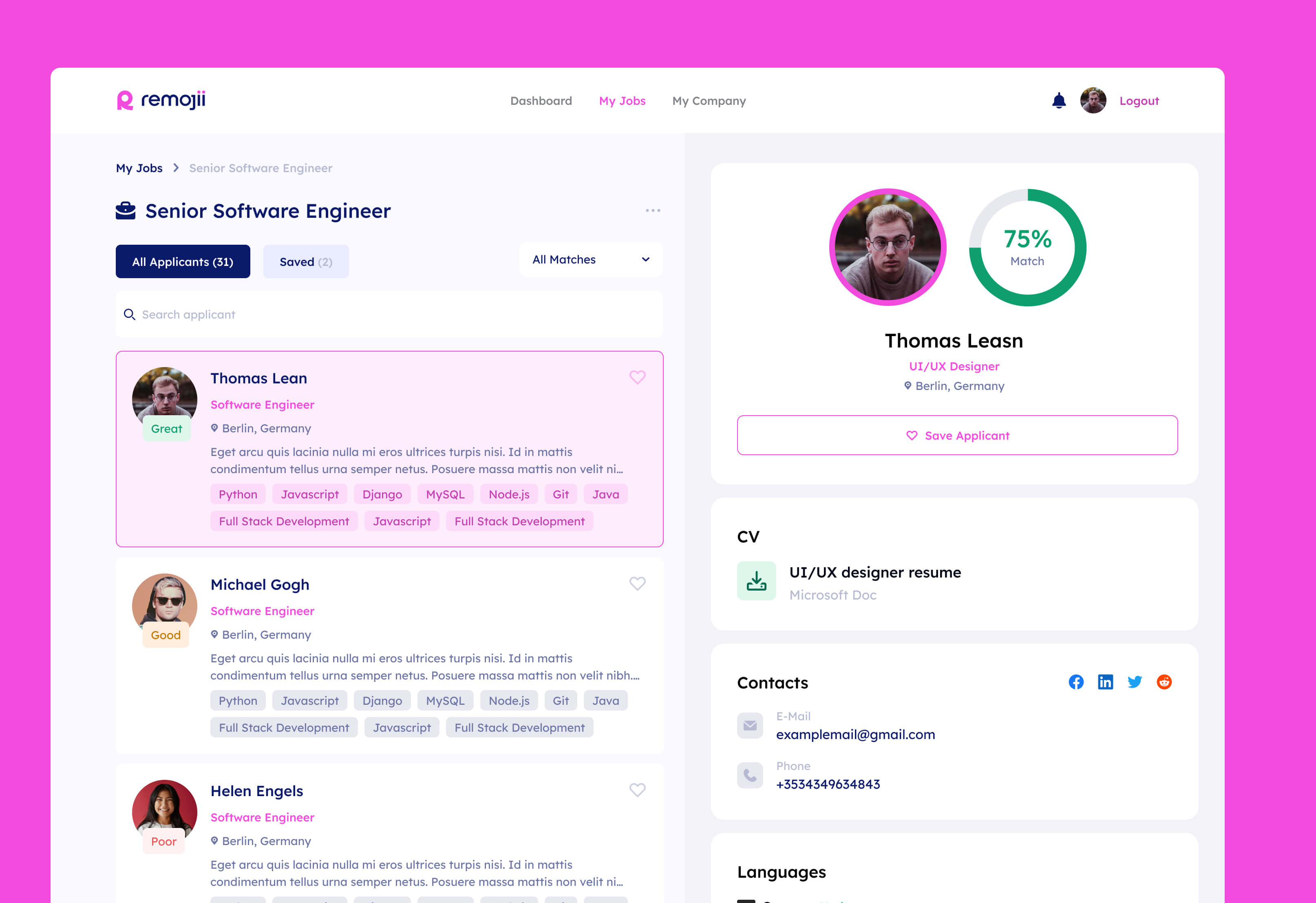
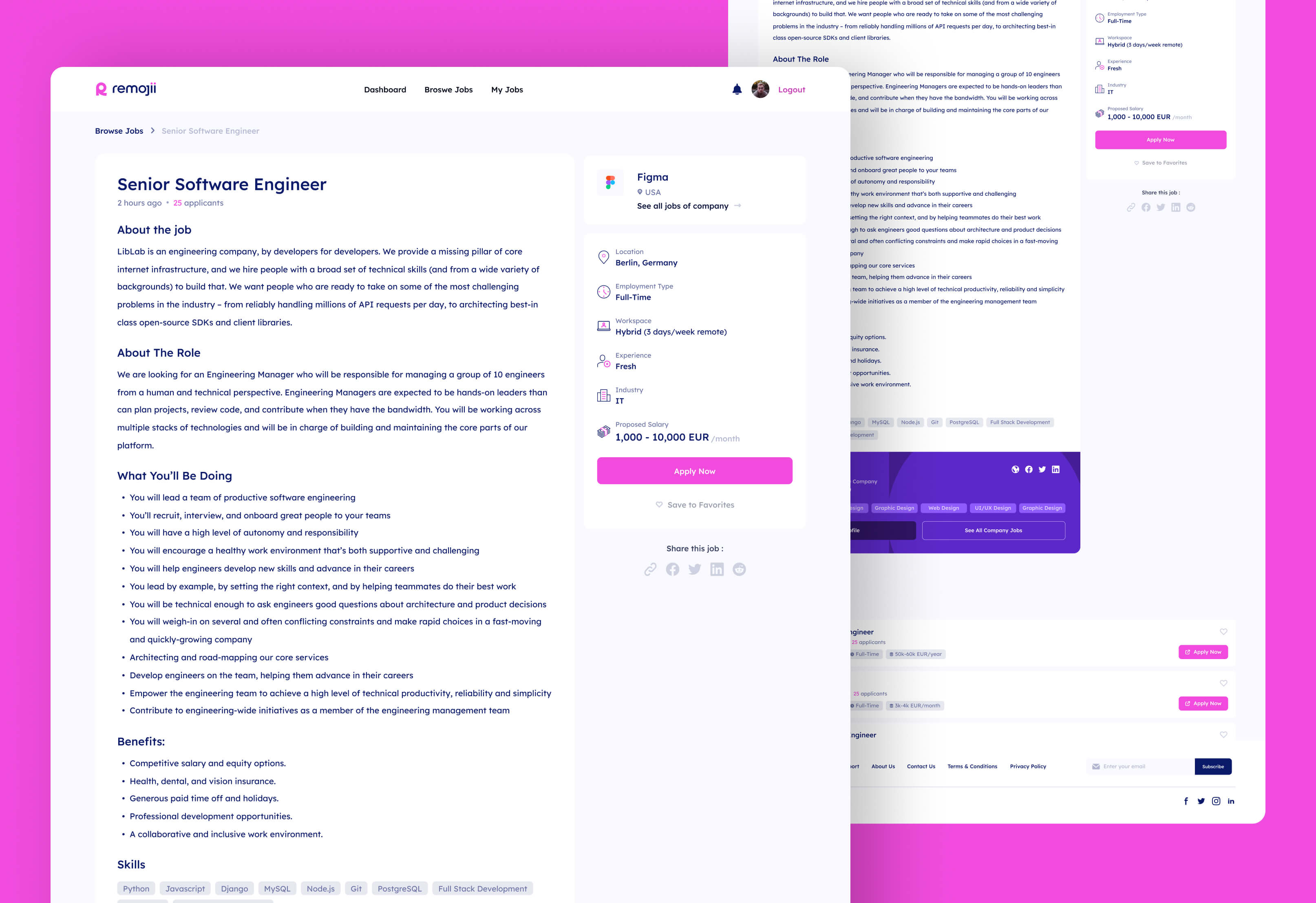
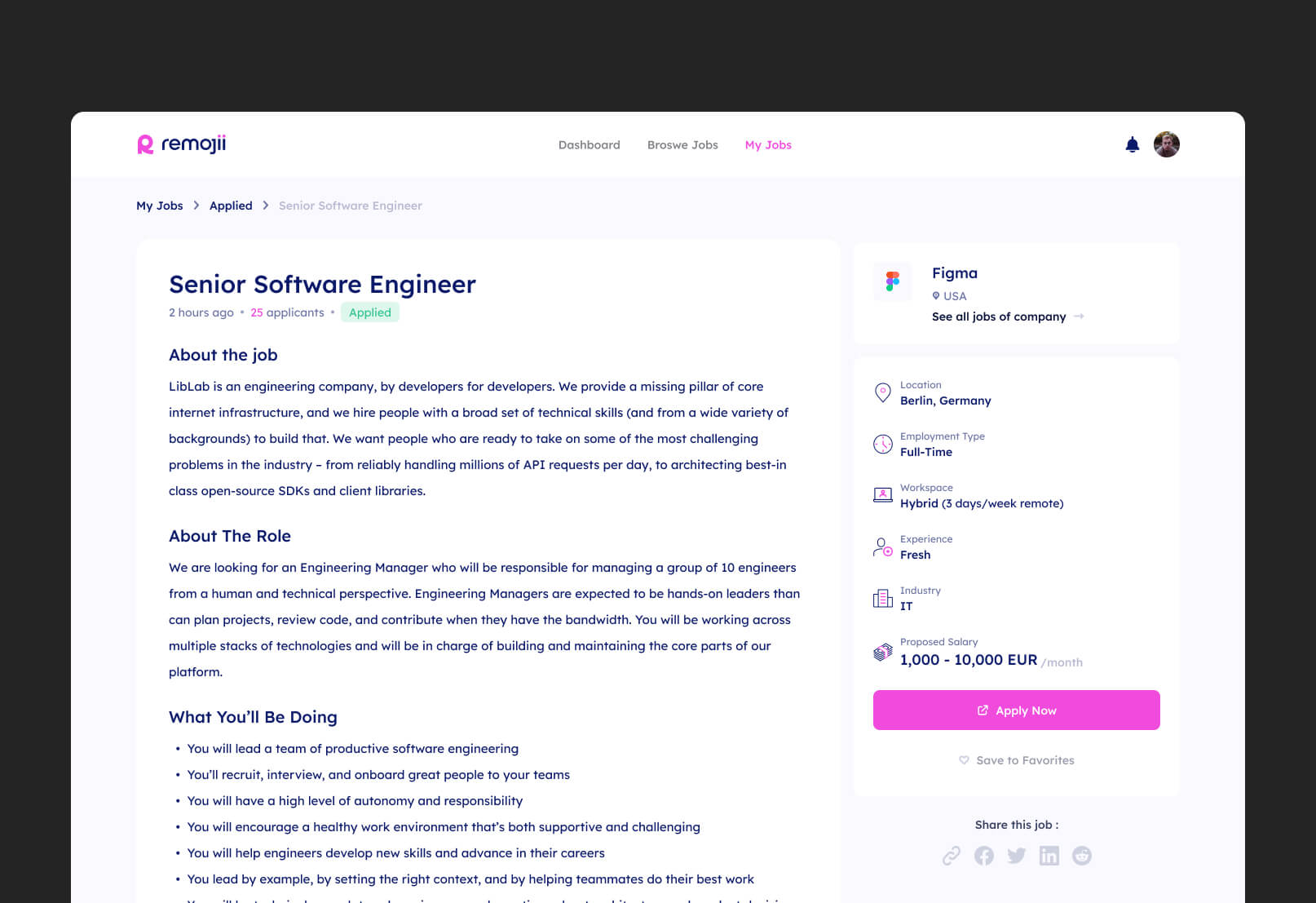
A strong emphasis was placed on clarity and information density. Job listings needed to remain scannable while still providing meaningful context, such as salary transparency, remote conditions, and matching indicators. Instead of over-designing interfaces, the approach relied on smart spacing, typography hierarchy, and subtle visual cues to guide attention.
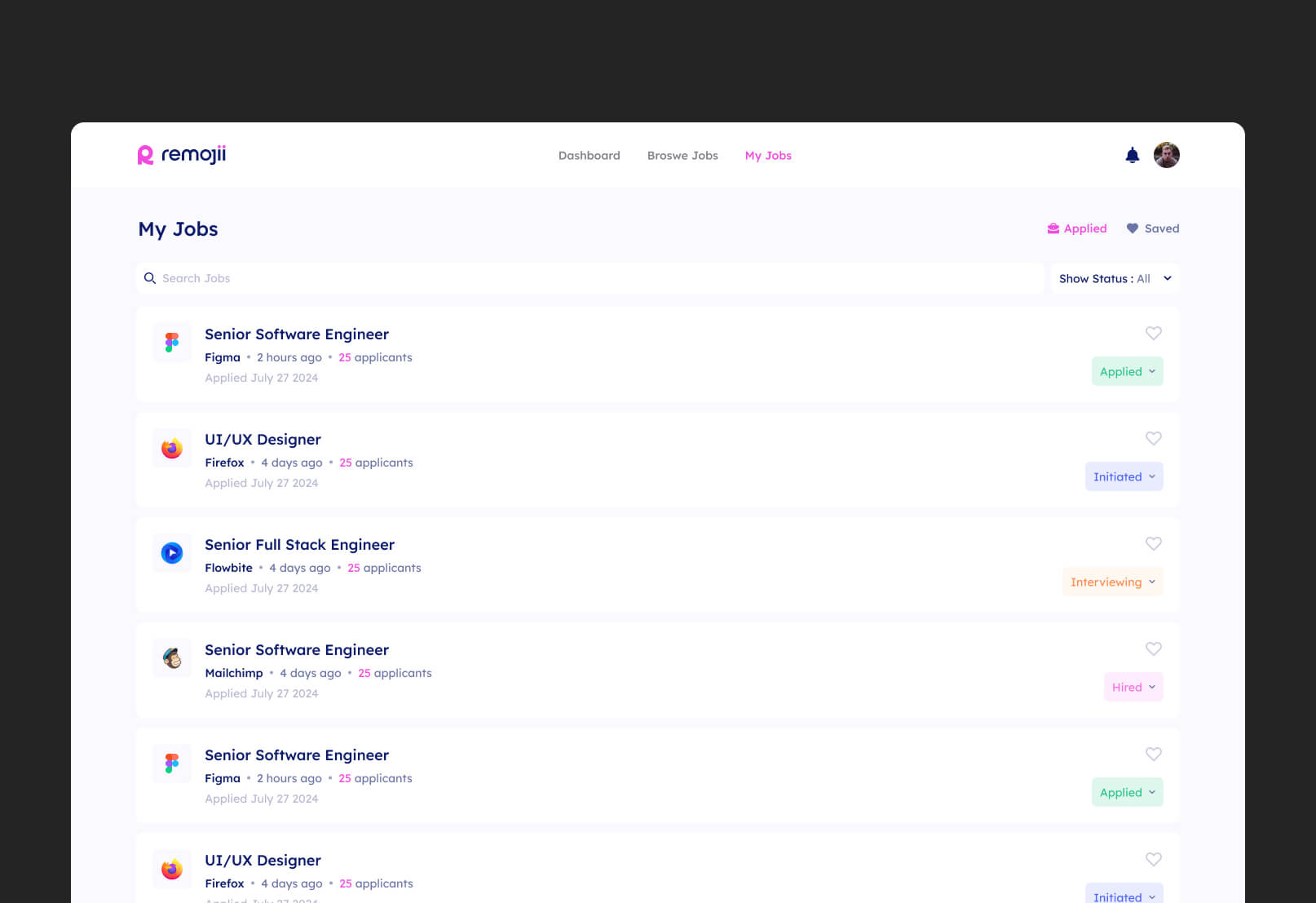
Interaction design was kept minimal and purposeful. Micro-interactions were used to reinforce feedback without distracting from the core task of exploring and applying for jobs. The overall visual direction stayed clean, structured, and system-driven, ensuring that the product feels scalable and consistent across different states and user types.
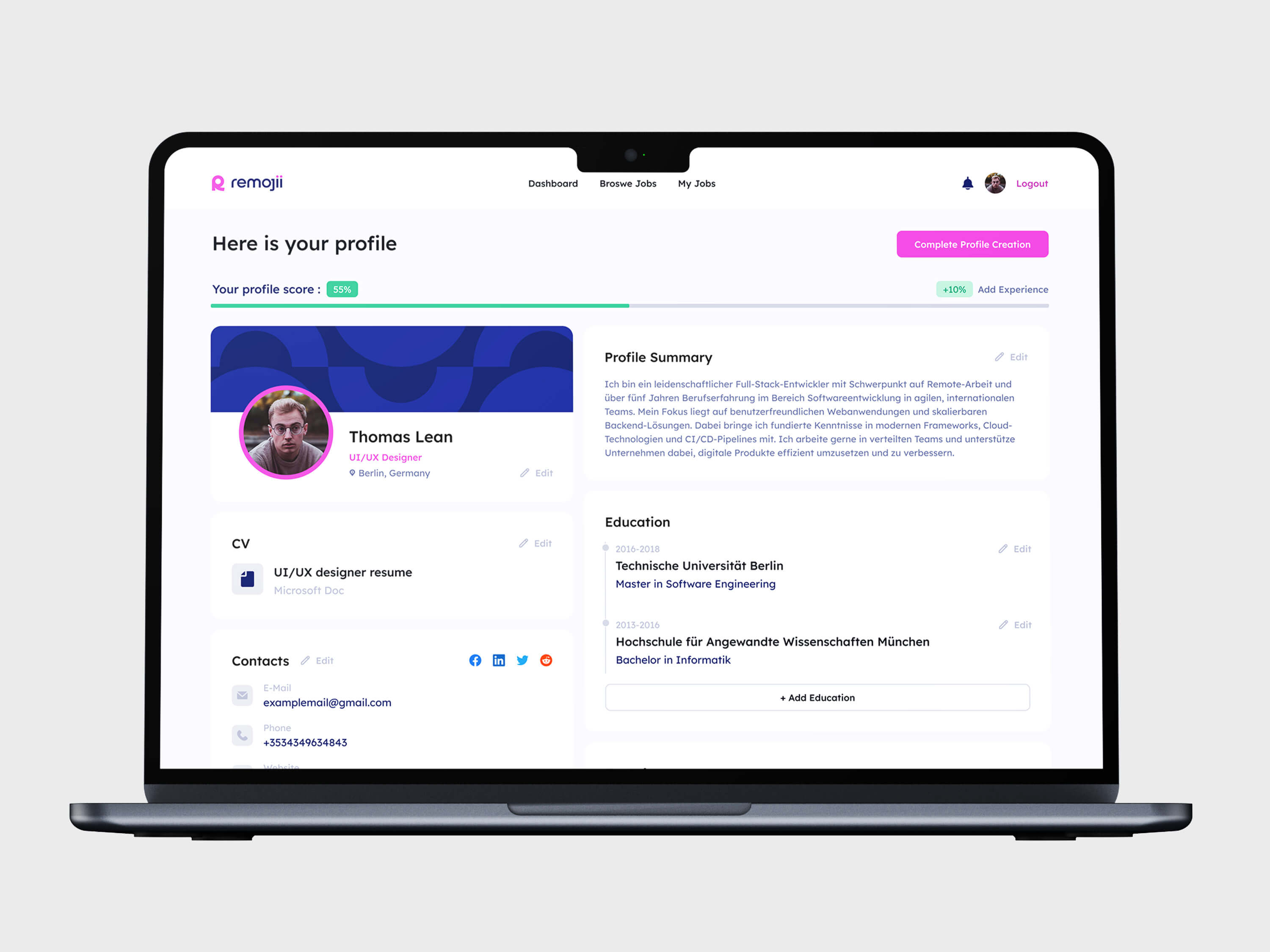
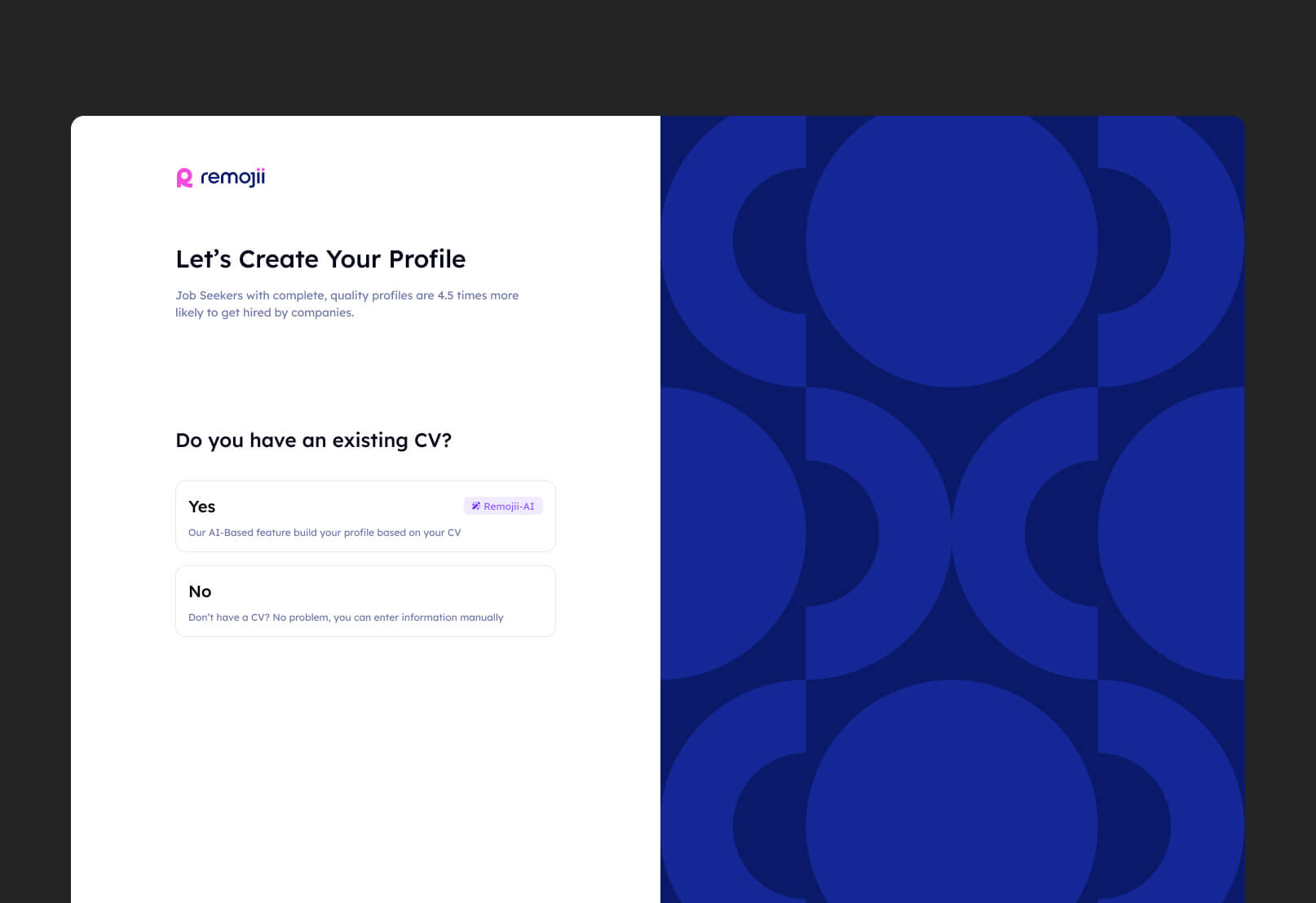
A key UX decision was introducing AI-powered onboarding through resume upload. Instead of manually filling out long registration forms, users can upload their CV, which is then parsed and transformed into a structured profile. The system extracts experience, skills, and roles, and automatically generates a complete user profile page. This significantly reduces friction during onboarding and ensures higher-quality data from the start of the user journey.
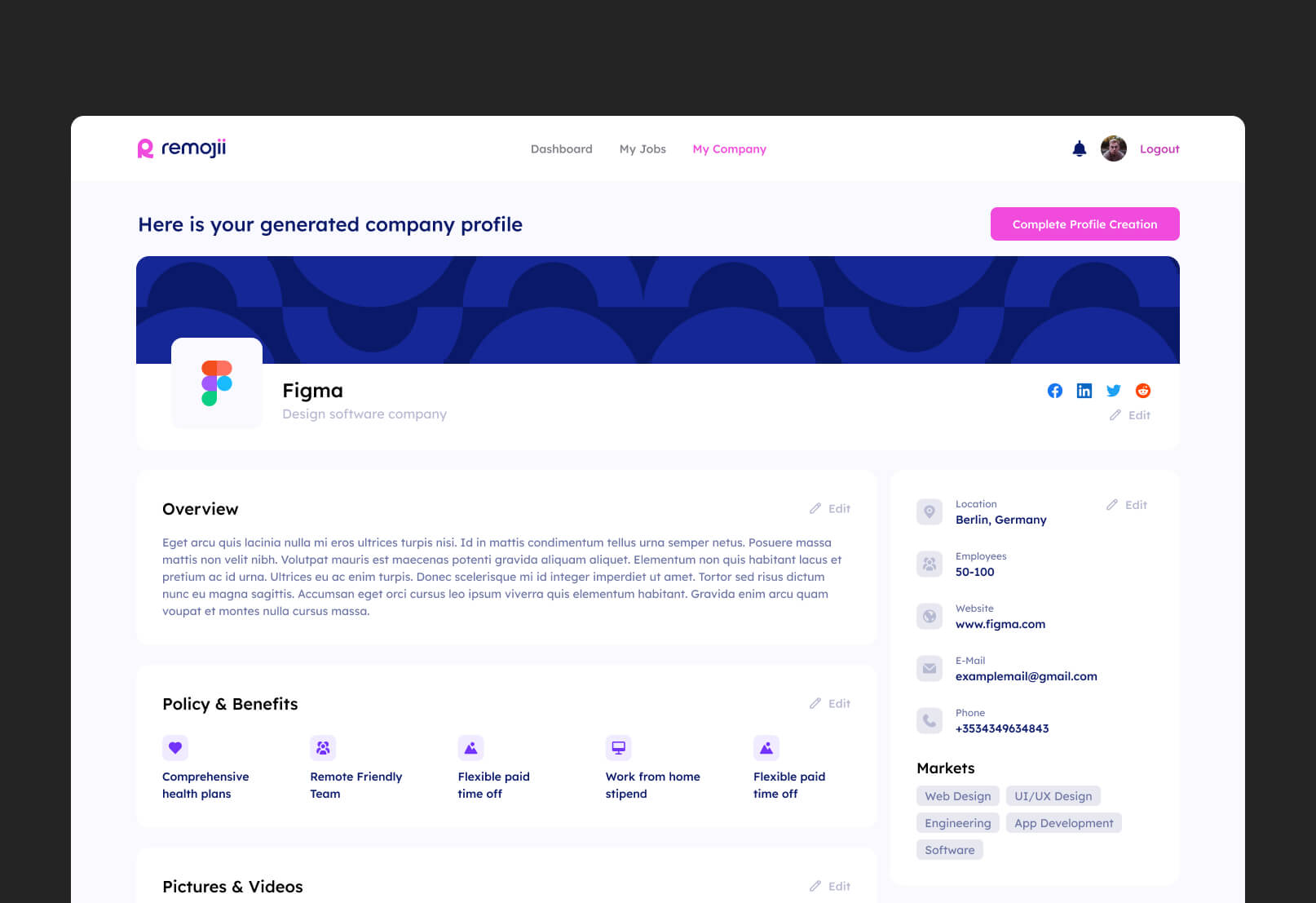
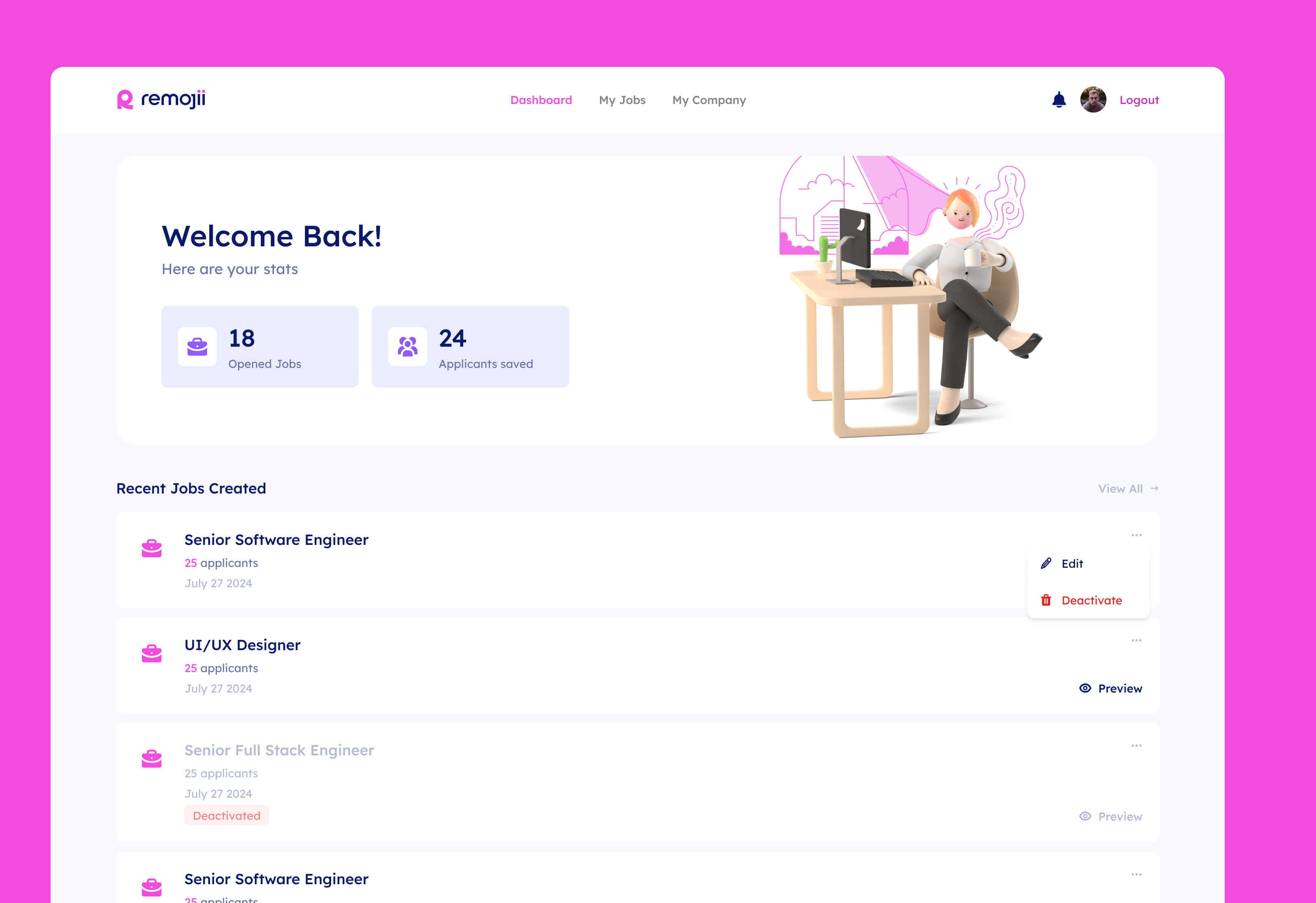
On the recruiter side, the platform introduces an AI-driven matching layer that supports candidate discovery and evaluation. Instead of manually filtering large pools of applicants, recruiters receive ranked candidate suggestions based on compatibility signals such as skills, experience, and role fit. This AI match system helps prioritize relevant profiles and speeds up the hiring process, while still allowing recruiters to review and refine selections manually.
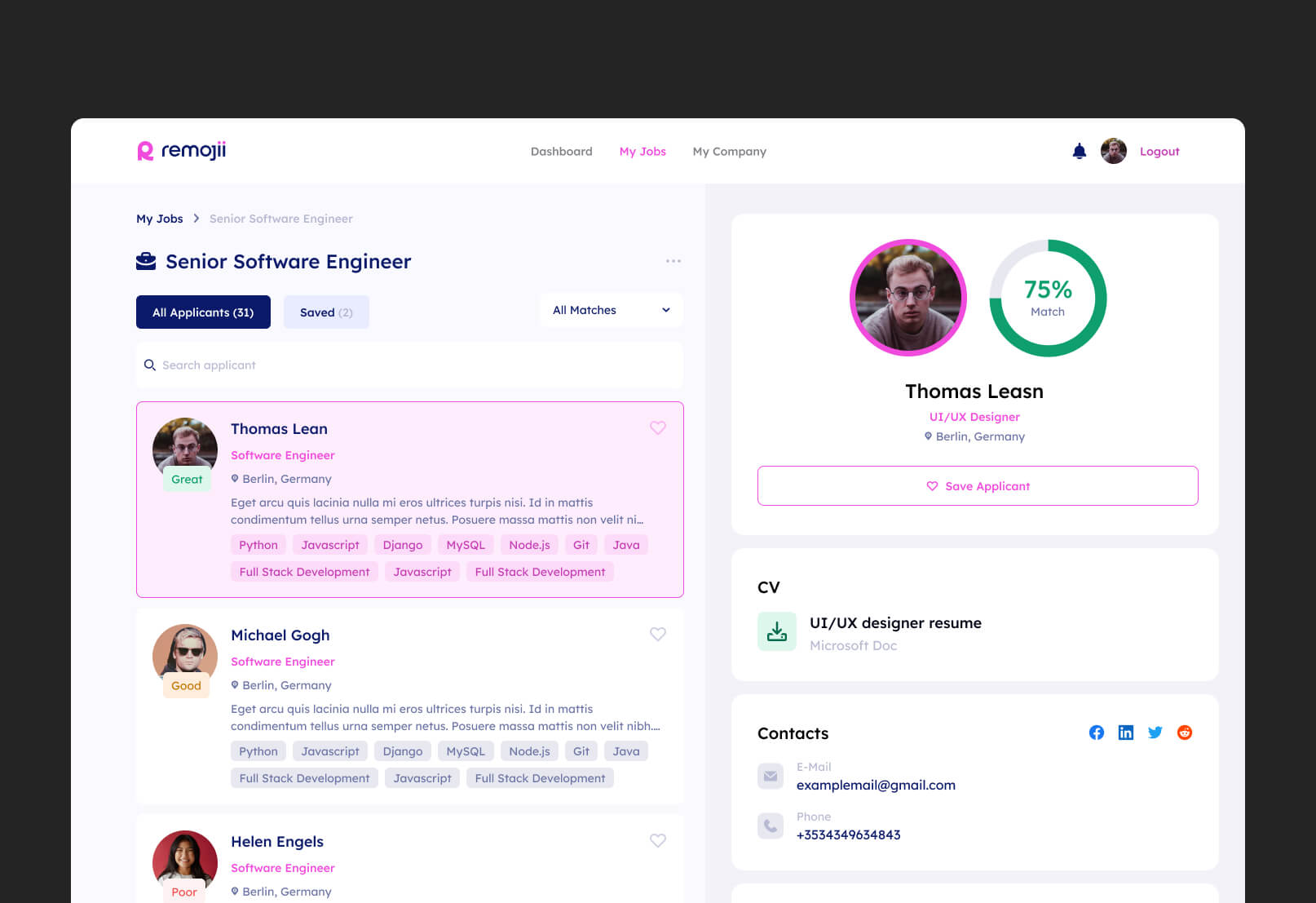
In the end, the interface became an extension of the existing design system rather than a replacement of it — focused on precision, usability, and reducing friction in a data-heavy environment.
outcomes and results
The final product delivered a streamlined and more intelligent approach to remote hiring, reducing friction on both sides of the platform. Users benefited from faster onboarding through AI-assisted profile creation, while recruiters gained more efficient tools for candidate discovery and evaluation through AI-based matching. The combination of a structured design system and tailored UX improvements ensured consistency, scalability, and ease of use across the entire platform.
Please also check my work for remojii marketing site
project gallery